

How to Authenticate a Macallan: A Buyer’s Field Guide
Macallan is widely considered the most counterfeited single malt Scotch in the world. The counterfeit market is large enough that empty Macallan bottles routinely trade for $100+ on secondary marketplaces. These fakes cluster aggressively around the 18-year, 25-year, and limited Edition Series—the exact bottles with the highest dollar-per-risk ratio for skilled forgers.
Every Macallan bottle above $500 in the secondary market should pass a rigorous 8-point inspection before you finalize a transaction: box, capsule, tax strip, glass, label, certificate, digital verification, and provenance. When any single point fails or feels uncertain, walk away. Counterfeit Macallan typically prices at 30% to 90% of genuine market value because forgers price to move volume quickly.
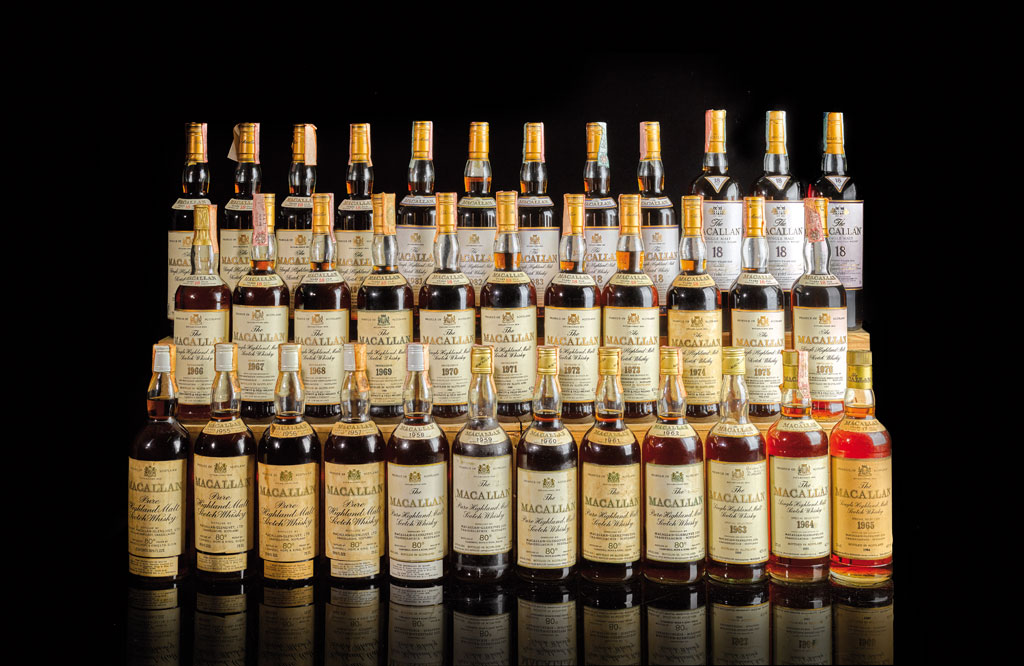
The highly targeted Macallan Sherry Oak 18 Year Old expression lineup.
Why Macallan Gets Counterfeited So Often
Counterfeiters target Macallan for four primary reasons:
- ★Brand Recognition: Macallan is the most globally recognized luxury single malt, meaning fakes find a massive pool of eager buyers.
- ★Premium Pricing: A counterfeit Macallan 25 sells for thousands of dollars; an equal forgery effort applied to a standard blend would fetch mere double digits.
- ★The Collector Market: Many bottles are bought strictly to hold as investment assets, meaning they may never be opened and verified by tasting.
- ★The Empty Bottle Problem: Authentic empty bottles trade openly for $100 to $500, giving forgers genuine glass and labels to refill with cheap whisky.
The famous record-shattering $2.72 million sale of the Valerio Adami 1926 expression at Sotheby's drastically accelerated the issue. Every record-breaking auction draws more speculative capital into the category—and more forgery attention along with it.
The 8-Point Inspection Protocol
This protocol assumes that any single component can be counterfeited—only a flawless combination of all eight checks guarantees authenticity.
1. Box and Outer Packaging
Macallan boxes are reference-quality goods. Edition Series, Sherry Oak, and Double Cask boxes use thick, embossed cardboard. Anniversary and Fine & Rare releases feature premium wooden boxes lined with leather or velvet.
- What to inspect: Print sharpness, embossing depth (tactile rise of roughly 1mm), and cradle fit. A genuine bottle slides into its inner cradle with zero play.
2. Capsule and Foil Seal
The capsule colorway must match the specific expression's year. A modern capsule sitting on a "vintage" bottle is a definitive red flag.
- What to inspect: Check for "torque"—a genuine capsule is firmly seated and will not rotate when twisted gently. Watch for visible adhesive residue or manual crimping along the bottom edge.

Physical capsule, tax strip, and glass structural integrity must be checked in tandem.
3. Tax Strips and Import Stamps
Tax jurisdiction must match. A current HMRC duty-paid strip on a vintage 1980s bottle is an immediate failure signal.
4. Bottle Glass: Mold Marks & Weight
Macallan glass is optically clear and meticulously finished. High-tier expressions carry laser-etched serial numbers near the base.
- The Scale Test: A digital kitchen scale check against published weight specs is one of the most reliable physical checks available.
5. Label Print Quality
Macallan labels use textured cotton stock—never standard glossy paper. Modern premium releases hide UV-fluorescent markers visible only under a UV penlight.
6. Certificates of Authenticity
Individual bottle numbers must be duplicated across the label, box plaque, and certificate. A missing COA is an automatic market value disqualifier.
7. Holographic & QR Verification
Modern Macallan releases utilize highly secure neck labels with a multi-layered 3D holographic logo and a unique QR code linked to the distillery's database.
8. Fill Level, Color, and Provenance
A factory-sealed Macallan should fill perfectly to the high shoulder. Color must match the cask type; a Sherry Oak 18 should showcase a deep, natural mahogany amber.
⚠️ CRITICAL RED FLAGS
HALT the transaction immediately if:
- Asking price is 30% to 50% below market comparables.
- Seller refuses to allow third-party professional authentication.
- The bottle lacks purchase receipts, backed only by "inherited" or "found in a basement" stories.
- High-pressure tactics forcing immediate payment via wire, crypto, or cash apps.
What to Do If You Spot a Fake
- Document everything: High-resolution photos of every failure point.
- Contact Brand Protection: Reach out to the official Macallan support team.
- File Disputes: Report counterfeit activity directly to the TTB (Alcohol and Tobacco Tax and Trade Bureau).