

COGNAC & BRANDY
Brandy is any spirit distilled from wine or fruit; Cognac is its most famous expression — a brandy made only in the Cognac region of France, from mostly Ugni Blanc grapes, double-distilled in copper pot stills and aged in French oak under strict AOC rules. The letters on the label — VS, VSOP, XO — are age grades set by the region's governing body, the BNIC, and refer to the youngest spirit in the blend. This is the home for Cognac and the wider brandy family in the vault.
- Brandy = a spirit distilled from wine or fruit; Cognac = a protected brandy from one French region.
- From the Cognac region (Charente), under AOC rules set by the BNIC.
- Made from mostly Ugni Blanc grapes, double-distilled in copper pot stills.
- Aged in French oak, a minimum of two years.
- Graded by age of the youngest spirit: VS (≥2 yr), VSOP (≥4 yr), XO (≥10 yr).
- Armagnac and Calvados are other protected French brandies.
:max_bytes(150000):strip_icc()/Cognac-vs-Brandy-FT-BLOG0823-df7025f0342c4692b989fecd53d43756.jpg)
Cognac starts as a thin, tart white wine — high acid, low alcohol, no added sugar — pressed mostly from Ugni Blanc. That wine is distilled twice in copper pot stills: the first pass yields a cloudy "brouillis," the second concentrates it to around 70% as a clear spirit called eau-de-vie. Only then does it meet oak, resting in French Limousin or Tronçais barrels where it gains colour, dried-fruit and spice notes and slowly mellows. A cellar master blends spirits of different ages and vineyard sites to build each house's style.
VS, VSOP and XO are set by the BNIC and tell you the age of the youngest spirit in the blend — not the quality. VS is at least two years, VSOP at least four, XO at least ten (since 2018). Because Cognac is blended, a bottle can hold far older spirit than its grade. Browse Cognac and the wider brandy family here, or see what's most popular across the vault.
What Defines Cognac
| Make & place | |
| Origin | The Cognac region, France (Charente) — AOC, overseen by the BNIC |
| Base | Mostly Ugni Blanc grapes; thin high-acid wine (~7–9%), no added sugar |
| Distillation | Double-distilled in copper pot (Charentais) stills, to ~70% |
| Oak | French oak (Limousin / Tronçais), minimum 2 years |
| The grades (age, not quality) | |
| VS | Very Special — youngest spirit at least 2 years |
| VSOP | Very Superior Old Pale — youngest at least 4 years |
| XO | Extra Old — youngest at least 10 years (since 2018) |
Collector Note
Cognac's interest runs along age and house: long-aged XO and vintage or single-estate bottlings, and the older designations beyond XO that some houses now release. Because it is blended and barrel-aged, the cellar master's hand shows in the glass. The marks worth reading are the grade, the producer, and any cru (such as Grande Champagne); condition matters, so store bottles upright, cool and out of direct light. A bottled Cognac does not keep aging — its age statement refers to time in barrel, not in glass.
Recommended Serving
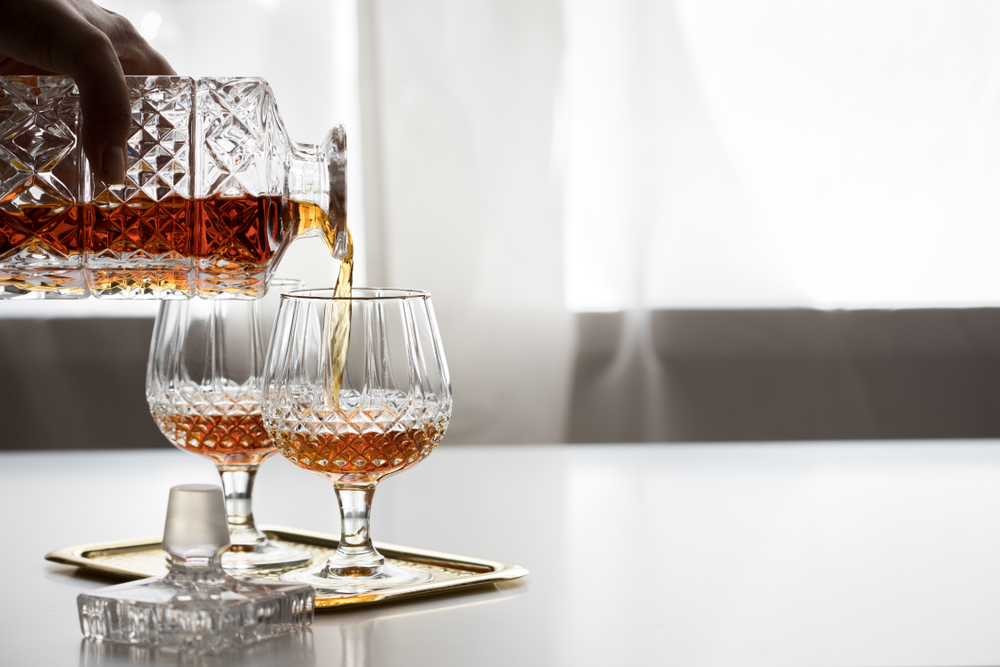
Cognac is usually enjoyed neat in a tulip glass at room temperature, where the oak and dried-fruit notes open up; younger VS and VSOP also sit at the heart of classic cocktails like the Sidecar. Brandy more broadly spans the same range, from after-dinner sipping to mixing.
Production Methodology
Cognac is governed end to end by AOC rules. The base wine must come from approved grapes — overwhelmingly Ugni Blanc — fermented without added sugar into a low-strength, high-acid wine. It is then distilled twice in copper pot stills within a set season, producing an eau-de-vie of roughly 70%. Aging takes place in French oak from the Limousin or Tronçais forests for at least two years, though most bottlings rest far longer, the cellar master blending across ages and crus to a house style. The BNIC certifies the result and sets the VS/VSOP/XO grades, which mark the age of the youngest eau-de-vie in the blend.
Authentication & Vault Preservation
Every bottle sold through Midnight Whiskey is sourced as an authorized, authentic retailer, vault-stored and insured under controlled conditions, shipped with protective handling and age-verified 21-and-over signature on delivery, and authenticated by our concierge before it ships. For the details, see the checks behind each bottle, vault storage and concierge, and delivery and signature.
Frequently Asked Questions
What's the difference between Cognac and brandy?
Brandy is the broad category: any spirit distilled from wine or fruit, made anywhere. Cognac is a specific, protected brandy — made only in the Cognac region of France, from mostly Ugni Blanc grapes, double-distilled in copper pot stills and aged at least two years in French oak, under AOC rules overseen by the BNIC. So all Cognac is brandy, but only brandy meeting those rules from that place may be called Cognac; Armagnac and Calvados are other protected French brandies.
What do VS, VSOP and XO mean?
They are age grades set by the BNIC, based on the youngest eau-de-vie (the brandy) in the blend, and they describe age rather than quality. VS (Very Special) uses spirit aged at least two years, VSOP (Very Superior Old Pale) at least four, and XO (Extra Old) at least ten, since the rules were tightened in 2018. Because Cognac is a blended spirit, a bottle often contains components far older than its grade requires.
Brandy is any spirit distilled from wine or fruit; Cognac is its most famous expression — a brandy made only in the Cognac region of France, from mostly Ugni Blanc grapes, double-distilled in copper pot stills and aged in French oak under strict AOC rules. The letters on the label — VS, VSOP, XO — are age grades set by the region's governing body, the BNIC, and refer to the youngest spirit in the blend. This is the home for Cognac and the wider brandy family in the vault.
- Brandy = a spirit distilled from wine or fruit; Cognac = a protected brandy from one French region.
- From the Cognac region (Charente), under AOC rules set by the BNIC.
- Made from mostly Ugni Blanc grapes, double-distilled in copper pot stills.
- Aged in French oak, a minimum of two years.
- Graded by age of the youngest spirit: VS (≥2 yr), VSOP (≥4 yr), XO (≥10 yr).
- Armagnac and Calvados are other protected French brandies.
Cognac starts as a thin, tart white wine — high acid, low alcohol, no added sugar — pressed mostly from Ugni Blanc. That wine is distilled twice in copper pot stills: the first pass yields a cloudy "brouillis," the second concentrates it to around 70% as a clear spirit called eau-de-vie. Only then does it meet oak, resting in French Limousin or Tronçais barrels where it gains colour, dried-fruit and spice notes and slowly mellows. A cellar master blends spirits of different ages and vineyard sites to build each house's style.
VS, VSOP and XO are set by the BNIC and tell you the age of the youngest spirit in the blend — not the quality. VS is at least two years, VSOP at least four, XO at least ten (since 2018). Because Cognac is blended, a bottle can hold far older spirit than its grade. Browse Cognac and the wider brandy family here, or see what's most popular across the vault.
What Defines Cognac
| Make & place | |
| Origin | The Cognac region, France (Charente) — AOC, overseen by the BNIC |
| Base | Mostly Ugni Blanc grapes; thin high-acid wine (~7–9%), no added sugar |
| Distillation | Double-distilled in copper pot (Charentais) stills, to ~70% |
| Oak | French oak (Limousin / Tronçais), minimum 2 years |
| The grades (age, not quality) | |
| VS | Very Special — youngest spirit at least 2 years |
| VSOP | Very Superior Old Pale — youngest at least 4 years |
| XO | Extra Old — youngest at least 10 years (since 2018) |
Collector Note
Cognac's interest runs along age and house: long-aged XO and vintage or single-estate bottlings, and the older designations beyond XO that some houses now release. Because it is blended and barrel-aged, the cellar master's hand shows in the glass. The marks worth reading are the grade, the producer, and any cru (such as Grande Champagne); condition matters, so store bottles upright, cool and out of direct light. A bottled Cognac does not keep aging — its age statement refers to time in barrel, not in glass.
Recommended Serving
Cognac is usually enjoyed neat in a tulip glass at room temperature, where the oak and dried-fruit notes open up; younger VS and VSOP also sit at the heart of classic cocktails like the Sidecar. Brandy more broadly spans the same range, from after-dinner sipping to mixing.
Production Methodology
Cognac is governed end to end by AOC rules. The base wine must come from approved grapes — overwhelmingly Ugni Blanc — fermented without added sugar into a low-strength, high-acid wine. It is then distilled twice in copper pot stills within a set season, producing an eau-de-vie of roughly 70%. Aging takes place in French oak from the Limousin or Tronçais forests for at least two years, though most bottlings rest far longer, the cellar master blending across ages and crus to a house style. The BNIC certifies the result and sets the VS/VSOP/XO grades, which mark the age of the youngest eau-de-vie in the blend.
Authentication & Vault Preservation
Every bottle sold through Midnight Whiskey is sourced as an authorized, authentic retailer, vault-stored and insured under controlled conditions, shipped with protective handling and age-verified 21-and-over signature on delivery, and authenticated by our concierge before it ships. For the details, see the checks behind each bottle, vault storage and concierge, and delivery and signature.
Frequently Asked Questions
What's the difference between Cognac and brandy?
Brandy is the broad category: any spirit distilled from wine or fruit, made anywhere. Cognac is a specific, protected brandy — made only in the Cognac region of France, from mostly Ugni Blanc grapes, double-distilled in copper pot stills and aged at least two years in French oak, under AOC rules overseen by the BNIC. So all Cognac is brandy, but only brandy meeting those rules from that place may be called Cognac; Armagnac and Calvados are other protected French brandies.
What do VS, VSOP and XO mean?
They are age grades set by the BNIC, based on the youngest eau-de-vie (the brandy) in the blend, and they describe age rather than quality. VS (Very Special) uses spirit aged at least two years, VSOP (Very Superior Old Pale) at least four, and XO (Extra Old) at least ten, since the rules were tightened in 2018. Because Cognac is a blended spirit, a bottle often contains components far older than its grade requires.