


CHAMPAGNE & SPARKLING WINE
Sparkling wine gets its bubbles from a second fermentation — and the big dividing line is where that happens. Champagne, made only in its namesake region of France, takes its second fermentation in the bottle, the traditional method that also makes Cava, Franciacorta and Crémant; Prosecco instead ferments in a tank, for a fresher, fruitier style. Most of it is dry — Brut — and Champagne in particular can age for years. This page is the home for bubbles in the vault, from everyday sparkling to vintage Champagne.
- The bubbles are carbon dioxide from a second fermentation — trapped in a sealed bottle or tank, it dissolves into the wine.
- The defining difference is where that second fermentation happens: in the bottle (traditional method) or in a pressurized tank (Charmat/tank method).
- Champagne can come only from the Champagne region of France, by the traditional method — from Chardonnay, Pinot Noir and Pinot Meunier.
- Most is dry ("Brut"); the dosage scale runs from bone-dry Brut Nature to sweet Doux.
- NV blends several years for a house style; vintage comes from a single year and ages longer.
- Serve well chilled, in a glass that lets the aromas gather.
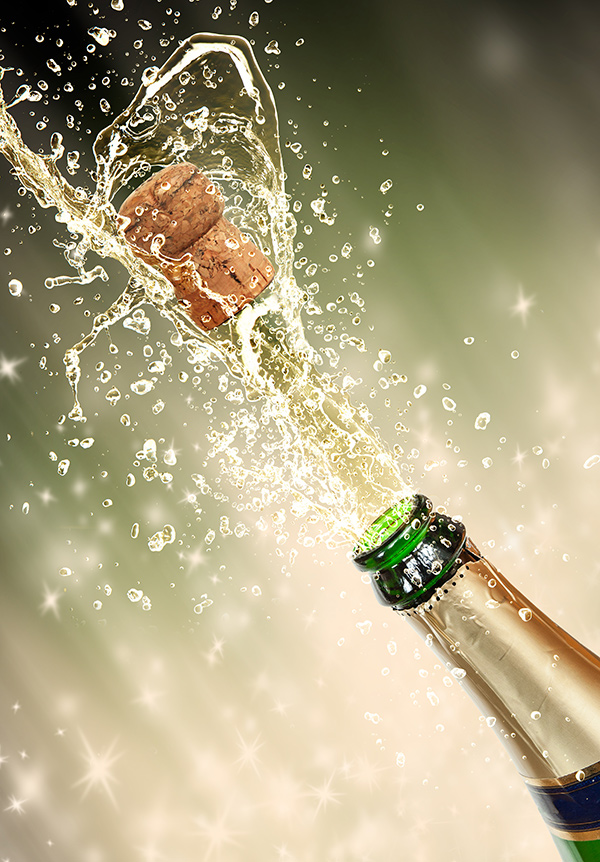
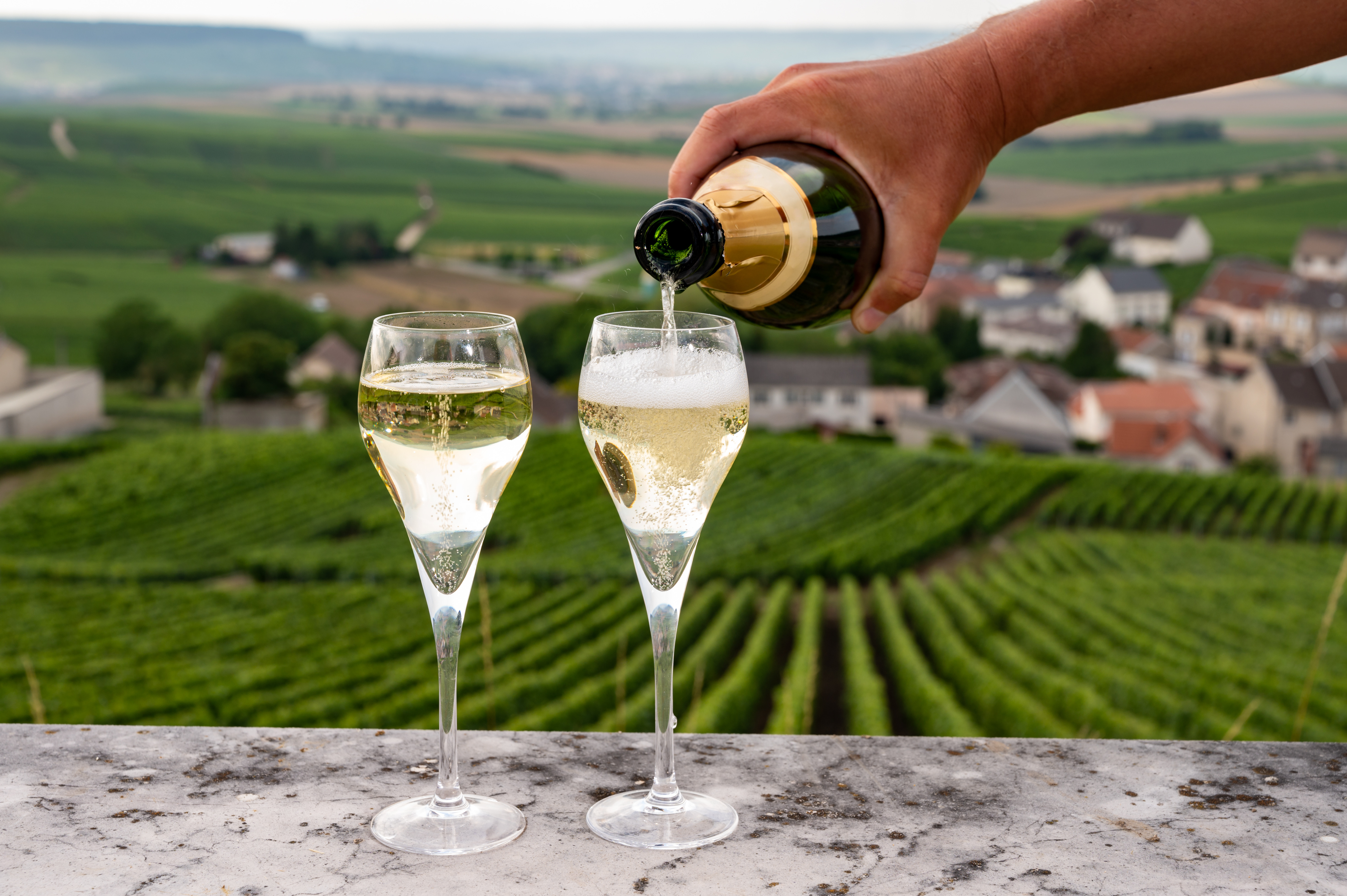
The traditional method runs the second fermentation in each bottle, then ages the wine on its spent yeast (the lees) — which builds fine, persistent bubbles and toasty, bready depth. It's used for Champagne, Cava, Franciacorta, Crémant and Cap Classique. The tank (Charmat) method ferments in a pressurized tank instead, keeping the wine fresher and fruitier with larger bubbles, at lower cost — the route for Prosecco and German Sekt.
Champagne is the protected name for traditional-method sparkling from one French region, blended from Chardonnay, Pinot Noir and Pinot Meunier; non-vintage ages at least 15 months, vintage at least three. Spain's Cava and Italy's Franciacorta make their own traditional-method wines, and Crémant covers the method across the rest of France. Prosecco, by contrast, is Glera grapes made fresh and fruity in the tank.
The Sparkling Styles
| Traditional method (bottle) | |
| Champagne | France, region-only; Chardonnay, Pinot Noir, Pinot Meunier — toasty, fine-bubbled |
| Cava | Spain; Macabeu, Xarel-lo, Parellada — same method as Champagne |
| Franciacorta | Italy (Lombardy); traditional-method, Chardonnay/Pinot Noir |
| Crémant | France, outside Champagne (Alsace, Loire, Bourgogne, …) |
| Cap Classique | South Africa; traditional-method sparkling |
| Tank method (Charmat) | |
| Prosecco | Italy; Glera grape — fresh, fruity, larger bubbles |
| Sekt | Germany; tank-method sparkling |
| Also | |
| Lambrusco | Italy (Emilia-Romagna); lightly sparkling, often red |
Sparkling sits alongside our red wine, white wine, and rosé wine collections in the cellar. For now, browse the current best sellers.
Collector Note
Most sparkling wine — and nearly all Prosecco and non-vintage Champagne — is made for current enjoyment, served cold. But the top of Champagne is a serious collecting category: vintage Champagne and the prestige cuvées such as Dom Pérignon, Krug, Cristal and Salon can age for decades, their lees-aging and bright acidity carrying them. As with all fine wine, vintage and storage matter, and a sealed sparkling bottle is sensitive to heat and light. Provenance, fill level and the state of the cork, cage and label all bear on a bottle's standing.
How the Bubbles Are Made
Both main methods start with a still "base wine" and add a mix of yeast and sugar (the liqueur de tirage) to start a second fermentation in a sealed vessel; with nowhere to escape, the carbon dioxide dissolves into the wine. In the traditional method, that happens in each individual bottle, which then ages on the spent yeast — the lees — developing toasty, bready complexity, before the sediment is worked into the neck (riddling), frozen and expelled (disgorgement), and topped up with a dosage that sets the final sweetness. The tank method runs the same second fermentation in one pressurized tank, then bottles under pressure — faster and fresher, the style behind Prosecco. Champagne, Cava, Franciacorta and Crémant take the bottle route.
Authentication & Vault Preservation
Every bottle sold through Midnight Whiskey is sourced as an authorized, authentic retailer, vault-stored and insured under controlled conditions, shipped with protective handling and age-verified 21-and-over signature on delivery, and authenticated by our concierge before it ships. For the details, see the provenance behind each bottle, chilled vault storage and our concierge, and how we source and ship.
Frequently Asked Questions
What's the difference between Champagne and sparkling wine?
All Champagne is sparkling wine, but only sparkling wine from the Champagne region of France — made by the traditional method, with its second fermentation in the bottle — can legally be called Champagne. Other regions use the same method to make their own: Cava in Spain, Franciacorta in Italy, Crémant elsewhere in France. Prosecco is different again, made by the tank method for a fresher, fruitier, larger-bubbled style. So "sparkling wine" is the whole family, and Champagne is one famous member of it.
What do Brut, vintage and NV mean on a Champagne label?
Brut means dry — the most common Champagne style — on a scale that runs from bone-dry Brut Nature through to sweet Doux (confusingly, "Extra Dry" is a touch sweeter than Brut). "NV," or non-vintage, is a blend across several years for a consistent house style and must age at least 15 months; a vintage Champagne is made from a single strong year and must age at least three. Prestige cuvées rest far longer. Specific bottlings and dosage vary, so check each listing.


Sparkling wine gets its bubbles from a second fermentation — and the big dividing line is where that happens. Champagne, made only in its namesake region of France, takes its second fermentation in the bottle, the traditional method that also makes Cava, Franciacorta and Crémant; Prosecco instead ferments in a tank, for a fresher, fruitier style. Most of it is dry — Brut — and Champagne in particular can age for years. This page is the home for bubbles in the vault, from everyday sparkling to vintage Champagne.
- The bubbles are carbon dioxide from a second fermentation — trapped in a sealed bottle or tank, it dissolves into the wine.
- The defining difference is where that second fermentation happens: in the bottle (traditional method) or in a pressurized tank (Charmat/tank method).
- Champagne can come only from the Champagne region of France, by the traditional method — from Chardonnay, Pinot Noir and Pinot Meunier.
- Most is dry ("Brut"); the dosage scale runs from bone-dry Brut Nature to sweet Doux.
- NV blends several years for a house style; vintage comes from a single year and ages longer.
- Serve well chilled, in a glass that lets the aromas gather.
The traditional method runs the second fermentation in each bottle, then ages the wine on its spent yeast (the lees) — which builds fine, persistent bubbles and toasty, bready depth. It's used for Champagne, Cava, Franciacorta, Crémant and Cap Classique. The tank (Charmat) method ferments in a pressurized tank instead, keeping the wine fresher and fruitier with larger bubbles, at lower cost — the route for Prosecco and German Sekt.
Champagne is the protected name for traditional-method sparkling from one French region, blended from Chardonnay, Pinot Noir and Pinot Meunier; non-vintage ages at least 15 months, vintage at least three. Spain's Cava and Italy's Franciacorta make their own traditional-method wines, and Crémant covers the method across the rest of France. Prosecco, by contrast, is Glera grapes made fresh and fruity in the tank.
The Sparkling Styles
| Traditional method (bottle) | |
| Champagne | France, region-only; Chardonnay, Pinot Noir, Pinot Meunier — toasty, fine-bubbled |
| Cava | Spain; Macabeu, Xarel-lo, Parellada — same method as Champagne |
| Franciacorta | Italy (Lombardy); traditional-method, Chardonnay/Pinot Noir |
| Crémant | France, outside Champagne (Alsace, Loire, Bourgogne, …) |
| Cap Classique | South Africa; traditional-method sparkling |
| Tank method (Charmat) | |
| Prosecco | Italy; Glera grape — fresh, fruity, larger bubbles |
| Sekt | Germany; tank-method sparkling |
| Also | |
| Lambrusco | Italy (Emilia-Romagna); lightly sparkling, often red |
Sparkling sits alongside our red wine, white wine, and rosé wine collections in the cellar. For now, browse the current best sellers.
Collector Note
Most sparkling wine — and nearly all Prosecco and non-vintage Champagne — is made for current enjoyment, served cold. But the top of Champagne is a serious collecting category: vintage Champagne and the prestige cuvées such as Dom Pérignon, Krug, Cristal and Salon can age for decades, their lees-aging and bright acidity carrying them. As with all fine wine, vintage and storage matter, and a sealed sparkling bottle is sensitive to heat and light. Provenance, fill level and the state of the cork, cage and label all bear on a bottle's standing.
How the Bubbles Are Made
Both main methods start with a still "base wine" and add a mix of yeast and sugar (the liqueur de tirage) to start a second fermentation in a sealed vessel; with nowhere to escape, the carbon dioxide dissolves into the wine. In the traditional method, that happens in each individual bottle, which then ages on the spent yeast — the lees — developing toasty, bready complexity, before the sediment is worked into the neck (riddling), frozen and expelled (disgorgement), and topped up with a dosage that sets the final sweetness. The tank method runs the same second fermentation in one pressurized tank, then bottles under pressure — faster and fresher, the style behind Prosecco. Champagne, Cava, Franciacorta and Crémant take the bottle route.
Authentication & Vault Preservation
Every bottle sold through Midnight Whiskey is sourced as an authorized, authentic retailer, vault-stored and insured under controlled conditions, shipped with protective handling and age-verified 21-and-over signature on delivery, and authenticated by our concierge before it ships. For the details, see the provenance behind each bottle, chilled vault storage and our concierge, and how we source and ship.
Frequently Asked Questions
What's the difference between Champagne and sparkling wine?
All Champagne is sparkling wine, but only sparkling wine from the Champagne region of France — made by the traditional method, with its second fermentation in the bottle — can legally be called Champagne. Other regions use the same method to make their own: Cava in Spain, Franciacorta in Italy, Crémant elsewhere in France. Prosecco is different again, made by the tank method for a fresher, fruitier, larger-bubbled style. So "sparkling wine" is the whole family, and Champagne is one famous member of it.
What do Brut, vintage and NV mean on a Champagne label?
Brut means dry — the most common Champagne style — on a scale that runs from bone-dry Brut Nature through to sweet Doux (confusingly, "Extra Dry" is a touch sweeter than Brut). "NV," or non-vintage, is a blend across several years for a consistent house style and must age at least 15 months; a vintage Champagne is made from a single strong year and must age at least three. Prestige cuvées rest far longer. Specific bottlings and dosage vary, so check each listing.