


FORTIFIED & DESSERT WINE
Fortified wines have a spirit added during or after fermentation, which lifts them to roughly 15–22% and can leave them dry or sweet — Port, Sherry and Madeira are the classics. Dessert wines are a serving category for sweet wines, fortified or not, including botrytis-touched bottles like Sauternes. The two overlap but aren't identical: one describes how a wine is made, the other how it's served. This is the home for both in the cellar.
- Fortified = a distilled spirit added to wine, raising it to ~15–22% ABV.
- Timing sets sweetness: spirit added mid-ferment → sweet (Port); after a full ferment → dry (Fino Sherry).
- Dessert wine = a serving category for sweet wines — fortified or not.
- Unfortified sweetness comes from late harvest, freezing, or noble-rot botrytis (Sauternes).
- The classics: Port, Sherry, Madeira (fortified) and Sauternes (botrytized).
- Usually poured in small measures — dry as an aperitif, sweet with dessert.

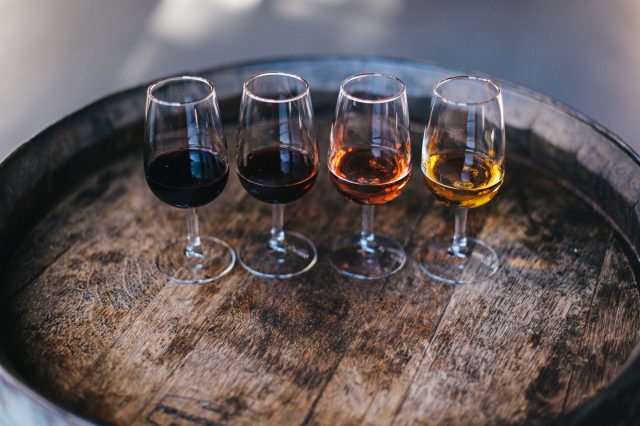
These two terms get used interchangeably, but they describe different things. "Fortified" is about method: a neutral grape spirit is added to the wine, both raising its strength and, depending on when it's added, deciding how sweet it ends up. "Dessert" is about service: any wine sweet enough to drink with or as a sweet course, which may be a fortified Port or an unfortified, botrytis-concentrated Sauternes. Plenty of wines belong to both groups; some belong to only one.
Because they're stronger and more concentrated than table wine, these are poured in small measures. Dry fortified styles — Fino and Manzanilla Sherry — shine as an aperitif; sweet ones — Tawny Port, Pedro Ximénez, Sauternes — pair with or stand in for dessert and cheese. Explore the rest of the cellar from red and white through Champagne & sparkling, or see what the cellar pours most.
The Classic Styles
| Port | Douro Valley, Portugal — fortified mid-ferment, sweet; Ruby, Tawny and Vintage styles |
| Sherry | Jerez, Spain — fortified after fermentation, mostly dry; Fino to Oloroso to sweet PX; solera-aged |
| Madeira | Madeira, Portugal — heated and oxidised; Sercial (dry) to Malmsey (sweet); very long-lived |
| Sauternes | Bordeaux, France — botrytized (noble rot), sweet, unfortified; a benchmark dessert wine |
Collector Note
This corner of the cellar is unusually age-worthy. Vintage Port and botrytized Sauternes can develop for decades, and the solera systems behind Sherry and Madeira blend many years into a consistent house style — Madeira in particular is famously durable once opened. Interest tends to follow vintage, producer and style rather than scarcity alone. Store bottles cool and out of direct light; note that an opened fortified wine keeps far longer than a table wine, while a sweet unfortified bottle is best treated like any fine wine.
Recommended Serving
Serve in small glasses, lightly chilled for dry Sherry and white Port, gently cool to room temperature for Tawny, Madeira and Sauternes. Dry styles open a meal; sweet styles close it, alongside dark chocolate, blue cheese, nuts or fruit tarts.
How They're Made
A fortified wine begins as an ordinary fermentation; the difference is the addition of a neutral grape spirit. Add it partway through, before the yeast has consumed all the sugar, and fermentation stops with sweetness intact — this is how Port is made. Let fermentation finish first and add the spirit afterwards, and the wine stays dry, as most Sherry begins. Sherry and Madeira are then aged by fractional blending in a solera, where older barrels are topped up from younger ones for a steady style; Madeira is additionally warmed to give its baked, oxidised character. Dessert wines that aren't fortified reach their sweetness in the vineyard instead — grapes left to over-ripen, freeze, or be touched by botrytis "noble rot," which shrivels them and concentrates sugar, as in Sauternes.
Authentication & Vault Preservation
Every bottle sold through Midnight Whiskey is sourced as an authorized, authentic retailer, vault-stored and insured under controlled conditions, shipped with protective handling and age-verified 21-and-over signature on delivery, and authenticated by our concierge before it ships. For the details, see how each bottle is authenticated, temperature-controlled storage and concierge, and how we pack and ship.
Frequently Asked Questions
What's the difference between fortified and dessert wine?
Fortified wine has a distilled spirit (usually a neutral grape spirit) added during or after fermentation, which raises it to roughly 15–22% ABV — Port, Sherry and Madeira are the classics, and they can be dry or sweet. Dessert wine is a serving category for sweet wines, whether fortified, like Port, or not, like botrytized Sauternes or a late-harvest Riesling. So the two overlap but aren't the same: fortified describes how a wine is made, dessert describes how it's served.
Why are some sweet and others dry, and how are they served?
For fortified wine, timing decides: add the spirit partway through fermentation and the sugar that survives makes it sweet, as in Port; let it ferment fully and add the spirit after, and it's dry, as in a Fino Sherry. Unfortified dessert wines instead concentrate sugar in the grape — through late harvest, freezing, or noble-rot botrytis, as in Sauternes. Both are usually poured in small measures: dry styles as an aperitif before a meal, sweet ones with or in place of dessert.
Fortified wines have a spirit added during or after fermentation, which lifts them to roughly 15–22% and can leave them dry or sweet — Port, Sherry and Madeira are the classics. Dessert wines are a serving category for sweet wines, fortified or not, including botrytis-touched bottles like Sauternes. The two overlap but aren't identical: one describes how a wine is made, the other how it's served. This is the home for both in the cellar.
- Fortified = a distilled spirit added to wine, raising it to ~15–22% ABV.
- Timing sets sweetness: spirit added mid-ferment → sweet (Port); after a full ferment → dry (Fino Sherry).
- Dessert wine = a serving category for sweet wines — fortified or not.
- Unfortified sweetness comes from late harvest, freezing, or noble-rot botrytis (Sauternes).
- The classics: Port, Sherry, Madeira (fortified) and Sauternes (botrytized).
- Usually poured in small measures — dry as an aperitif, sweet with dessert.
These two terms get used interchangeably, but they describe different things. "Fortified" is about method: a neutral grape spirit is added to the wine, both raising its strength and, depending on when it's added, deciding how sweet it ends up. "Dessert" is about service: any wine sweet enough to drink with or as a sweet course, which may be a fortified Port or an unfortified, botrytis-concentrated Sauternes. Plenty of wines belong to both groups; some belong to only one.
Because they're stronger and more concentrated than table wine, these are poured in small measures. Dry fortified styles — Fino and Manzanilla Sherry — shine as an aperitif; sweet ones — Tawny Port, Pedro Ximénez, Sauternes — pair with or stand in for dessert and cheese. Explore the rest of the cellar from red and white through Champagne & sparkling, or see what the cellar pours most.
The Classic Styles
| Port | Douro Valley, Portugal — fortified mid-ferment, sweet; Ruby, Tawny and Vintage styles |
| Sherry | Jerez, Spain — fortified after fermentation, mostly dry; Fino to Oloroso to sweet PX; solera-aged |
| Madeira | Madeira, Portugal — heated and oxidised; Sercial (dry) to Malmsey (sweet); very long-lived |
| Sauternes | Bordeaux, France — botrytized (noble rot), sweet, unfortified; a benchmark dessert wine |
Collector Note
This corner of the cellar is unusually age-worthy. Vintage Port and botrytized Sauternes can develop for decades, and the solera systems behind Sherry and Madeira blend many years into a consistent house style — Madeira in particular is famously durable once opened. Interest tends to follow vintage, producer and style rather than scarcity alone. Store bottles cool and out of direct light; note that an opened fortified wine keeps far longer than a table wine, while a sweet unfortified bottle is best treated like any fine wine.
Recommended Serving
Serve in small glasses, lightly chilled for dry Sherry and white Port, gently cool to room temperature for Tawny, Madeira and Sauternes. Dry styles open a meal; sweet styles close it, alongside dark chocolate, blue cheese, nuts or fruit tarts.
How They're Made
A fortified wine begins as an ordinary fermentation; the difference is the addition of a neutral grape spirit. Add it partway through, before the yeast has consumed all the sugar, and fermentation stops with sweetness intact — this is how Port is made. Let fermentation finish first and add the spirit afterwards, and the wine stays dry, as most Sherry begins. Sherry and Madeira are then aged by fractional blending in a solera, where older barrels are topped up from younger ones for a steady style; Madeira is additionally warmed to give its baked, oxidised character. Dessert wines that aren't fortified reach their sweetness in the vineyard instead — grapes left to over-ripen, freeze, or be touched by botrytis "noble rot," which shrivels them and concentrates sugar, as in Sauternes.
Authentication & Vault Preservation
Every bottle sold through Midnight Whiskey is sourced as an authorized, authentic retailer, vault-stored and insured under controlled conditions, shipped with protective handling and age-verified 21-and-over signature on delivery, and authenticated by our concierge before it ships. For the details, see how each bottle is authenticated, temperature-controlled storage and concierge, and how we pack and ship.
Frequently Asked Questions
What's the difference between fortified and dessert wine?
Fortified wine has a distilled spirit (usually a neutral grape spirit) added during or after fermentation, which raises it to roughly 15–22% ABV — Port, Sherry and Madeira are the classics, and they can be dry or sweet. Dessert wine is a serving category for sweet wines, whether fortified, like Port, or not, like botrytized Sauternes or a late-harvest Riesling. So the two overlap but aren't the same: fortified describes how a wine is made, dessert describes how it's served.
Why are some sweet and others dry, and how are they served?
For fortified wine, timing decides: add the spirit partway through fermentation and the sugar that survives makes it sweet, as in Port; let it ferment fully and add the spirit after, and it's dry, as in a Fino Sherry. Unfortified dessert wines instead concentrate sugar in the grape — through late harvest, freezing, or noble-rot botrytis, as in Sauternes. Both are usually poured in small measures: dry styles as an aperitif before a meal, sweet ones with or in place of dessert.