


White Wine | The Alabaster
White wine is fermented without the grape skins, which keeps it pale, low in tannin and driven by acidity — anything from crisp, mineral Pinot Grigio and Sauvignon Blanc to rich, oaked Chardonnay and the sweet wines of Sauternes. The great names come from Burgundy, the Loire, Germany and Alsace, and the best are built to age. This page is the home for white wine in the vault, from crisp everyday bottles to Grand Cru white Burgundy.
- Fermented without prolonged skin contact — the opposite of red — which keeps colour and tannin low.
- Colour ranges from straw-yellow to green-gold; acidity, not tannin, is the backbone.
- Mostly from green/yellow grapes, but dark grapes work too if the juice runs clear — Pinot Noir is widely used in Champagne.
- Sweetness runs the full range — bone-dry to lusciously sweet (Chablis to Sauternes).
- Best served chilled; lighter wines colder, fuller and sweeter wines a touch warmer.
- Most whites are best young, but the great ones age for years.
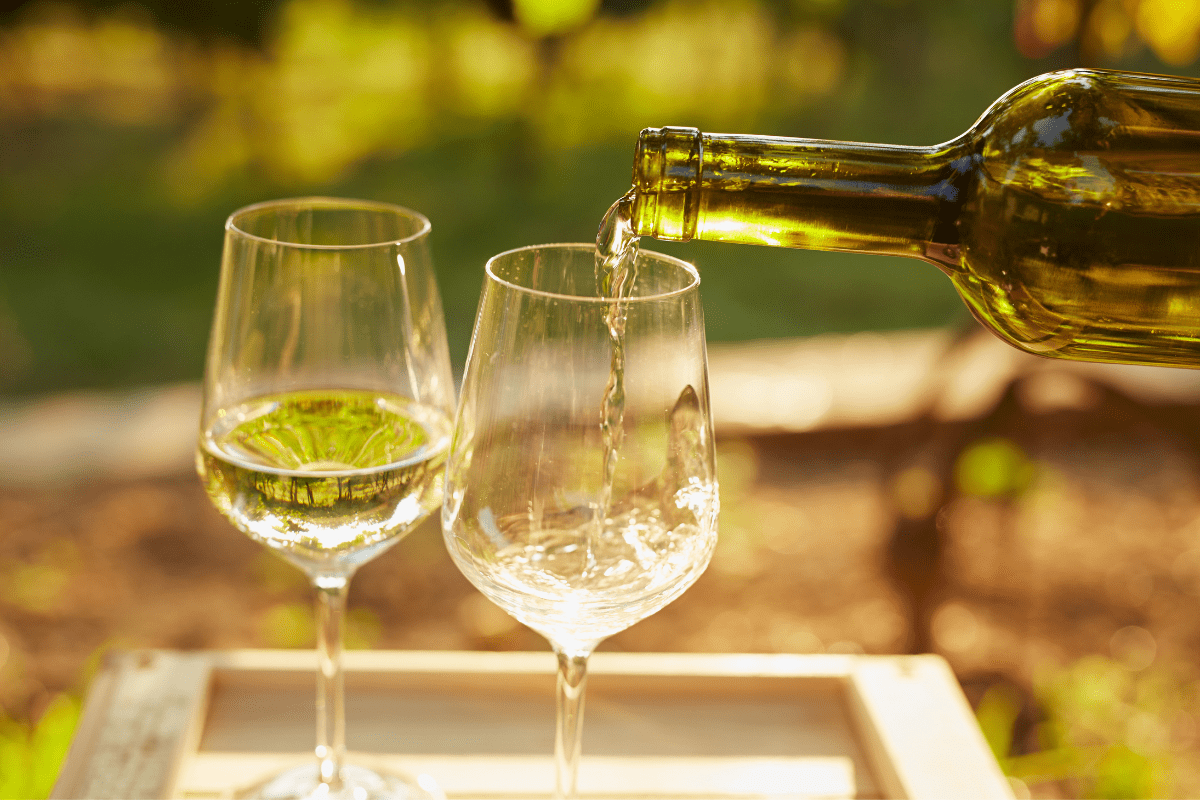

Chardonnay is the grape of white Burgundy — Chablis, Puligny-Montrachet, Meursault — and turns rich and nutty with oak and malolactic fermentation. Sauvignon Blanc is its bright, herbaceous opposite, at home in Sancerre and Marlborough. Riesling, from Germany and Alsace, is aromatic and high in acid, made bone-dry through to sweet. Add Pinot Grigio (light and crisp), Chenin Blanc (the Loire's chameleon), and Albariño, Grüner Veltliner and Viognier.
White wine spans a wide spectrum. At one end, bone-dry and mineral — Chablis, Muscadet, Assyrtiko; in the middle, dry and fruit-forward Sauvignon Blanc and Pinot Grigio; then off-dry German Riesling; and at the far end, the sweet wines — late-harvest Riesling, Moscato d'Asti, and the botrytised wines of Sauternes and Tokaji. The same grape, grown and made differently, can sit almost anywhere on that line.
The Major White Grapes
| Crisp & Dry | |
| Sauvignon Blanc | Bright, herbaceous, citrus — Sancerre, Marlborough |
| Pinot Grigio | Light and lean — northern Italy, Alsace (as Pinot Gris) |
| Albariño | Saline and zesty — Rías Baixas, Spain |
| Aromatic | |
| Riesling | Floral, high-acid, dry to sweet, ageworthy — Germany, Alsace |
| Gewürztraminer | Lychee and rose, full-flavoured — Alsace |
| Viognier | Peach and apricot, soft — the northern Rhône (Condrieu) |
| Full & Often Oaked | |
| Chardonnay | Nutty, creamy with oak; the grape of white Burgundy and Champagne |
| Chenin Blanc | Versatile, dry to sweet — the Loire (Vouvray), South Africa |
| Sémillon | Waxy and rich; Bordeaux whites and the base of Sauternes |
| Sweet | |
| Sauternes (Sémillon) | Botrytised dessert wine — honeyed and long-lived |
| Late-harvest Riesling | Concentrated and sweet, balanced by acidity |
| Moscato | Light, grapey, gently sweet — Moscato d'Asti |
White sits alongside our red, rosé and sparkling collections in the cellar. For now, browse our best-selling bottles.
Collector Note
White wine is generally less collected than the top reds, and many whites are at their best young — but the exceptions are some of the most prized bottles in the world. The Grand Cru white Burgundies of Montrachet and Corton-Charlemagne, the great German Rieslings, and the sweet wines of Sauternes can age for decades. As with all fine wine, vintage matters and the bottle is fragile: cellar temperature, fill level and the state of the cork, capsule and label all bear on how it shows and on its standing.
How White Wine Is Made
White wine begins by separating juice from skins, usually pressing the grapes soon after harvest so the clear juice can ferment on its own — which is why white wine stays pale and low in tannin. From there, the winemaker's choices set the style: fermenting cool in stainless steel preserves bright fruit and crisp acidity, the route for Sauvignon Blanc and Riesling; fermenting or aging in oak, often with malolactic fermentation, builds the creamy, nutty texture of fuller Chardonnay. Sweet whites are made by stopping fermentation while sugar remains, or from grapes concentrated by late harvest or noble rot, as at Sauternes.
Authentication & Vault Preservation
Every bottle sold through Midnight Whiskey is sourced as an authorized, authentic retailer, vault-stored and insured under controlled conditions, shipped with protective handling and age-verified 21-and-over signature on delivery, and authenticated by our concierge before it ships. For the details, see how each bottle's provenance is checked, cold vault storage and the concierge, and our sourcing, storage and shipping.
Frequently Asked Questions
What makes a wine white?
White wine is fermented without prolonged contact with the grape skins — the step that gives red wine its colour and tannin. Press the juice off the skins first and ferment it on its own, and you get a wine that's pale, low in tannin and driven by acidity and fruit. It can even be made from dark-skinned grapes, as long as the juice runs clear; Pinot Noir, for instance, is widely used in Champagne. Styles run from bone-dry and crisp to lusciously sweet.
Which white wines age, and which are best young?
Most white wine is made to be enjoyed young, while it's fresh and vibrant — crisp styles like Pinot Grigio and Sauvignon Blanc especially. But several whites are built to age: the Grand Cru white Burgundies, top German Riesling, and the great sweet wines of Sauternes can develop for years or decades, thanks to their acidity and concentration. As with any fine wine, vintage and storage shape how a bottle shows. Specific producers and vintages vary, so check each listing.


White wine is fermented without the grape skins, which keeps it pale, low in tannin and driven by acidity — anything from crisp, mineral Pinot Grigio and Sauvignon Blanc to rich, oaked Chardonnay and the sweet wines of Sauternes. The great names come from Burgundy, the Loire, Germany and Alsace, and the best are built to age. This page is the home for white wine in the vault, from crisp everyday bottles to Grand Cru white Burgundy.
- Fermented without prolonged skin contact — the opposite of red — which keeps colour and tannin low.
- Colour ranges from straw-yellow to green-gold; acidity, not tannin, is the backbone.
- Mostly from green/yellow grapes, but dark grapes work too if the juice runs clear — Pinot Noir is widely used in Champagne.
- Sweetness runs the full range — bone-dry to lusciously sweet (Chablis to Sauternes).
- Best served chilled; lighter wines colder, fuller and sweeter wines a touch warmer.
- Most whites are best young, but the great ones age for years.
Chardonnay is the grape of white Burgundy — Chablis, Puligny-Montrachet, Meursault — and turns rich and nutty with oak and malolactic fermentation. Sauvignon Blanc is its bright, herbaceous opposite, at home in Sancerre and Marlborough. Riesling, from Germany and Alsace, is aromatic and high in acid, made bone-dry through to sweet. Add Pinot Grigio (light and crisp), Chenin Blanc (the Loire's chameleon), and Albariño, Grüner Veltliner and Viognier.
White wine spans a wide spectrum. At one end, bone-dry and mineral — Chablis, Muscadet, Assyrtiko; in the middle, dry and fruit-forward Sauvignon Blanc and Pinot Grigio; then off-dry German Riesling; and at the far end, the sweet wines — late-harvest Riesling, Moscato d'Asti, and the botrytised wines of Sauternes and Tokaji. The same grape, grown and made differently, can sit almost anywhere on that line.
The Major White Grapes
| Crisp & Dry | |
| Sauvignon Blanc | Bright, herbaceous, citrus — Sancerre, Marlborough |
| Pinot Grigio | Light and lean — northern Italy, Alsace (as Pinot Gris) |
| Albariño | Saline and zesty — Rías Baixas, Spain |
| Aromatic | |
| Riesling | Floral, high-acid, dry to sweet, ageworthy — Germany, Alsace |
| Gewürztraminer | Lychee and rose, full-flavoured — Alsace |
| Viognier | Peach and apricot, soft — the northern Rhône (Condrieu) |
| Full & Often Oaked | |
| Chardonnay | Nutty, creamy with oak; the grape of white Burgundy and Champagne |
| Chenin Blanc | Versatile, dry to sweet — the Loire (Vouvray), South Africa |
| Sémillon | Waxy and rich; Bordeaux whites and the base of Sauternes |
| Sweet | |
| Sauternes (Sémillon) | Botrytised dessert wine — honeyed and long-lived |
| Late-harvest Riesling | Concentrated and sweet, balanced by acidity |
| Moscato | Light, grapey, gently sweet — Moscato d'Asti |
White sits alongside our red, rosé and sparkling collections in the cellar. For now, browse our best-selling bottles.
Collector Note
White wine is generally less collected than the top reds, and many whites are at their best young — but the exceptions are some of the most prized bottles in the world. The Grand Cru white Burgundies of Montrachet and Corton-Charlemagne, the great German Rieslings, and the sweet wines of Sauternes can age for decades. As with all fine wine, vintage matters and the bottle is fragile: cellar temperature, fill level and the state of the cork, capsule and label all bear on how it shows and on its standing.
How White Wine Is Made
White wine begins by separating juice from skins, usually pressing the grapes soon after harvest so the clear juice can ferment on its own — which is why white wine stays pale and low in tannin. From there, the winemaker's choices set the style: fermenting cool in stainless steel preserves bright fruit and crisp acidity, the route for Sauvignon Blanc and Riesling; fermenting or aging in oak, often with malolactic fermentation, builds the creamy, nutty texture of fuller Chardonnay. Sweet whites are made by stopping fermentation while sugar remains, or from grapes concentrated by late harvest or noble rot, as at Sauternes.
Authentication & Vault Preservation
Every bottle sold through Midnight Whiskey is sourced as an authorized, authentic retailer, vault-stored and insured under controlled conditions, shipped with protective handling and age-verified 21-and-over signature on delivery, and authenticated by our concierge before it ships. For the details, see how each bottle's provenance is checked, cold vault storage and the concierge, and our sourcing, storage and shipping.
Frequently Asked Questions
What makes a wine white?
White wine is fermented without prolonged contact with the grape skins — the step that gives red wine its colour and tannin. Press the juice off the skins first and ferment it on its own, and you get a wine that's pale, low in tannin and driven by acidity and fruit. It can even be made from dark-skinned grapes, as long as the juice runs clear; Pinot Noir, for instance, is widely used in Champagne. Styles run from bone-dry and crisp to lusciously sweet.
Which white wines age, and which are best young?
Most white wine is made to be enjoyed young, while it's fresh and vibrant — crisp styles like Pinot Grigio and Sauvignon Blanc especially. But several whites are built to age: the Grand Cru white Burgundies, top German Riesling, and the great sweet wines of Sauternes can develop for years or decades, thanks to their acidity and concentration. As with any fine wine, vintage and storage shape how a bottle shows. Specific producers and vintages vary, so check each listing.