

RUM
Rum is distilled from sugarcane — usually molasses, sometimes fresh-pressed cane juice — and it's the most varied of the major spirits. Because rum isn't tied to one country the way tequila or bourbon is, every region makes its own: bold pot-still rums from Jamaica, lighter column-distilled ron from the Spanish Caribbean, grassy agricole from Martinique. Styles run from clear white rum for mixing to long-aged dark rums for sipping. This page is the home for rum in the vault, across molasses and cane-juice styles, white through dark.
- Distilled from sugarcane — molasses or cane syrup, or fresh-pressed cane juice.
- No single global standard — unlike tequila or bourbon, rum isn't tied to one country, so styles vary widely.
- Molasses rum is the most common; cane-juice rum (rhum agricole) is grassier and more vegetal.
- Colour grades: white, gold, dark and spiced — but colour isn't a reliable guide to age.
- US minimum 40% ABV (80 proof).
- The darker styles are barrel-aged; many are built to sip.
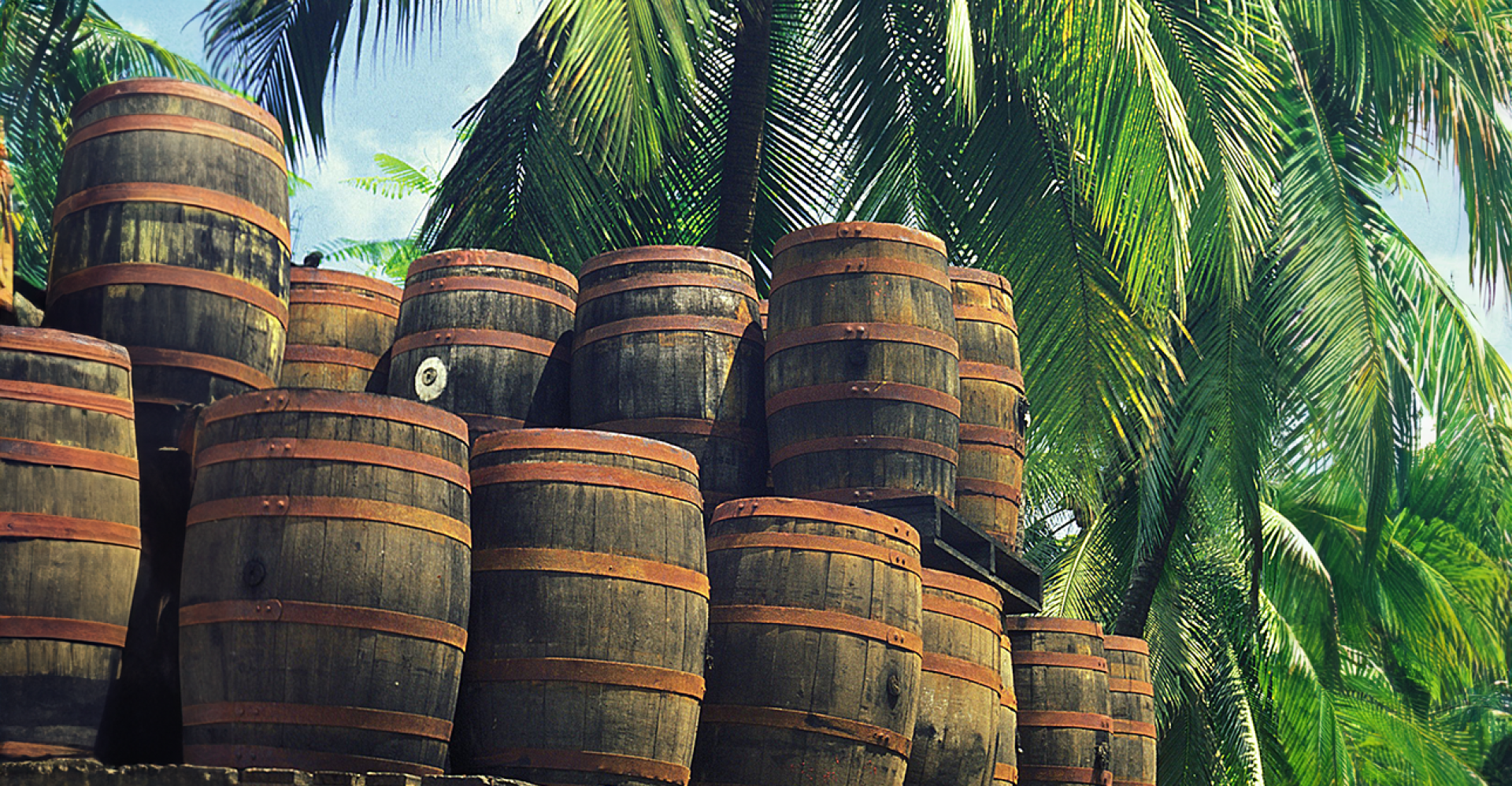

Most rum is made from molasses, the dark syrup left after sugar is refined — the route behind both the bolder English-style rums and the lighter Spanish-style ron. A smaller share is made straight from fresh-pressed sugarcane juice: that's rhum agricole, the French-Caribbean style with a grassy, vegetal character, and Brazil's cachaça is a close cousin. The base sets the starting character before the still and the barrel take over.
White rum is clear and built for cocktails; gold has taken on some barrel character; dark comes from longer aging or heavier molasses, and rewards sipping; spiced rum adds spice or tropical notes. Just remember colour isn't a reliable age guide — caramel colouring is allowed, and some clear rums are aged then filtered. Regional families add another layer: bold Jamaican and Demerara, lighter Spanish-style ron, grassy French agricole.
Rum by Colour & Style
| By colour | |
| White / light | Clear, lightly or un-aged; built for mixing |
| Gold / amber | Some barrel aging; caramel, vanilla, light oak |
| Dark / black | Longer aging or heavier molasses; rich, for sipping |
| Spiced | Flavoured with spices or tropical notes |
| By base & region | |
| Molasses rum | Most rum — English-style (Jamaica, Guyana) and Spanish-style ron (Cuba, Puerto Rico, DR) |
| Rhum agricole | Fresh cane juice; French Caribbean (Martinique AOC); grassy, vegetal |
| Cachaça | Brazil; a cane-juice cousin of rum |
Rum sits alongside our other spirits in the vault. Browse the related collections for neutral vodkas, aromatic botanical gins, premium 100% blue agave tequila, or see our top-selling bottles.
Collector Note
At its top end, rum is one of the great sipping spirits: long-aged dark rums and older agricole reward patience much as aged whiskey or brandy does, with real depth from the barrel. Because rum has no single global standard, though, an age statement on one bottle may not mean what it does on another, and added sugar or colouring is permitted in some styles — so the label and the producer matter more than the shade in the glass. As always, store bottles upright, cool and out of direct light, and buy on provenance and condition.
How Rum Is Made
Rum begins with sugarcane in one of a few forms: molasses (the syrup left after sugar is refined), cane syrup, or fresh-pressed cane juice. That base is fermented — sometimes quickly with cultured yeast, sometimes long and wild for a funkier, high-ester spirit — then distilled, in column stills for lighter styles or pot stills for bolder ones, often as a blend of the two. From there it may be bottled clear and young, or aged in barrel, where it gains colour and notes of caramel, vanilla and oak. Because there's no single international rulebook, each country and producer sets its own course, which is exactly why rum covers so much ground.
Authentication & Vault Preservation
Every bottle sold through Midnight Whiskey is sourced as an authorized, authentic retailer, vault-stored and insured under controlled conditions, shipped with protective handling and age-verified 21-and-over signature on delivery, and authenticated by our concierge before it ships. For the details, see how we confirm each bottle's provenance, the climate-controlled vault and concierge, and shipping and storage details.
Frequently Asked Questions
What is rum made from, and why are there so many styles?
Rum is distilled from sugarcane — most often from molasses, the syrup left after refining sugar, but also from fresh-pressed cane juice (the basis of French-Caribbean rhum agricole) or cane syrup. What makes rum so varied is that, unlike tequila or bourbon, it isn't tied to a single country or one set of rules: every producing region has its own, so styles run from bold pot-still Jamaican rum to lighter column-distilled Spanish-style ron and grassy agricole. The base, the still, the yeast and the aging all shape the result.
What do white, gold and dark rum mean — and does colour tell me the age?
Broadly, white (or light) rum is clear and made for mixing; gold or amber rum has had some barrel aging, picking up caramel and vanilla; and dark rum comes from longer aging or heavier molasses, rich enough to sip. Spiced rum is flavoured with spices or tropical notes. But colour is an unreliable guide to age: caramel colouring is permitted in many rums, and some clear rums are actually aged and then filtered to remove the colour. For age and additives, read the label rather than the shade. Specific bottlings vary, so check each listing.
Rum is distilled from sugarcane — usually molasses, sometimes fresh-pressed cane juice — and it's the most varied of the major spirits. Because rum isn't tied to one country the way tequila or bourbon is, every region makes its own: bold pot-still rums from Jamaica, lighter column-distilled ron from the Spanish Caribbean, grassy agricole from Martinique. Styles run from clear white rum for mixing to long-aged dark rums for sipping. This page is the home for rum in the vault, across molasses and cane-juice styles, white through dark.
- Distilled from sugarcane — molasses or cane syrup, or fresh-pressed cane juice.
- No single global standard — unlike tequila or bourbon, rum isn't tied to one country, so styles vary widely.
- Molasses rum is the most common; cane-juice rum (rhum agricole) is grassier and more vegetal.
- Colour grades: white, gold, dark and spiced — but colour isn't a reliable guide to age.
- US minimum 40% ABV (80 proof).
- The darker styles are barrel-aged; many are built to sip.
Most rum is made from molasses, the dark syrup left after sugar is refined — the route behind both the bolder English-style rums and the lighter Spanish-style ron. A smaller share is made straight from fresh-pressed sugarcane juice: that's rhum agricole, the French-Caribbean style with a grassy, vegetal character, and Brazil's cachaça is a close cousin. The base sets the starting character before the still and the barrel take over.
White rum is clear and built for cocktails; gold has taken on some barrel character; dark comes from longer aging or heavier molasses, and rewards sipping; spiced rum adds spice or tropical notes. Just remember colour isn't a reliable age guide — caramel colouring is allowed, and some clear rums are aged then filtered. Regional families add another layer: bold Jamaican and Demerara, lighter Spanish-style ron, grassy French agricole.
Rum by Colour & Style
| By colour | |
| White / light | Clear, lightly or un-aged; built for mixing |
| Gold / amber | Some barrel aging; caramel, vanilla, light oak |
| Dark / black | Longer aging or heavier molasses; rich, for sipping |
| Spiced | Flavoured with spices or tropical notes |
| By base & region | |
| Molasses rum | Most rum — English-style (Jamaica, Guyana) and Spanish-style ron (Cuba, Puerto Rico, DR) |
| Rhum agricole | Fresh cane juice; French Caribbean (Martinique AOC); grassy, vegetal |
| Cachaça | Brazil; a cane-juice cousin of rum |
Rum sits alongside our other spirits in the vault. Browse the related collections for neutral vodkas, aromatic botanical gins, premium 100% blue agave tequila, or see our top-selling bottles.
Collector Note
At its top end, rum is one of the great sipping spirits: long-aged dark rums and older agricole reward patience much as aged whiskey or brandy does, with real depth from the barrel. Because rum has no single global standard, though, an age statement on one bottle may not mean what it does on another, and added sugar or colouring is permitted in some styles — so the label and the producer matter more than the shade in the glass. As always, store bottles upright, cool and out of direct light, and buy on provenance and condition.
How Rum Is Made
Rum begins with sugarcane in one of a few forms: molasses (the syrup left after sugar is refined), cane syrup, or fresh-pressed cane juice. That base is fermented — sometimes quickly with cultured yeast, sometimes long and wild for a funkier, high-ester spirit — then distilled, in column stills for lighter styles or pot stills for bolder ones, often as a blend of the two. From there it may be bottled clear and young, or aged in barrel, where it gains colour and notes of caramel, vanilla and oak. Because there's no single international rulebook, each country and producer sets its own course, which is exactly why rum covers so much ground.
Authentication & Vault Preservation
Every bottle sold through Midnight Whiskey is sourced as an authorized, authentic retailer, vault-stored and insured under controlled conditions, shipped with protective handling and age-verified 21-and-over signature on delivery, and authenticated by our concierge before it ships. For the details, see how we confirm each bottle's provenance, the climate-controlled vault and concierge, and shipping and storage details.
Frequently Asked Questions
What is rum made from, and why are there so many styles?
Rum is distilled from sugarcane — most often from molasses, the syrup left after refining sugar, but also from fresh-pressed cane juice (the basis of French-Caribbean rhum agricole) or cane syrup. What makes rum so varied is that, unlike tequila or bourbon, it isn't tied to a single country or one set of rules: every producing region has its own, so styles run from bold pot-still Jamaican rum to lighter column-distilled Spanish-style ron and grassy agricole. The base, the still, the yeast and the aging all shape the result.
What do white, gold and dark rum mean — and does colour tell me the age?
Broadly, white (or light) rum is clear and made for mixing; gold or amber rum has had some barrel aging, picking up caramel and vanilla; and dark rum comes from longer aging or heavier molasses, rich enough to sip. Spiced rum is flavoured with spices or tropical notes. But colour is an unreliable guide to age: caramel colouring is permitted in many rums, and some clear rums are actually aged and then filtered to remove the colour. For age and additives, read the label rather than the shade. Specific bottlings vary, so check each listing.