

The Pappy Van Winkle Family Tree: One Recipe, Two Distilleries, Six Bottles
The Pappy Van Winkle Family Tree
A family name that survived Prohibition, a distillery sale, and its own extinction — and the single production decision that carried it through all three.

On Derby Day of 1935, a distillery opened on fifty-three acres in Shively, on the wrong side of the Louisville city line — chosen for the water and for the tax boundary. A sign went up on the property announcing that no chemists were allowed. The man responsible was sixty-one years old, had been selling whiskey since he was nineteen, and had just spent thirteen years of national Prohibition keeping a distilling business alive on a medicinal licence.
Ninety-one years later, his surname is the most counterfeited word in American whiskey.
The distance between those two facts is what this piece is about. The Pappy Van Winkle family tree is not one brand with several age statements; it is a name that has passed through two distilleries, four corporate owners, one total closure, and three generations of a single family — and the bottle on the shelf today is legally and physically a different object from the bottle that wore the same label in 1996. Pappy Van Winkle's Family Reserve is a wheated Kentucky straight bourbon whiskey produced by Buffalo Trace Distillery in Frankfort, Kentucky, owned by the Sazerac Company, and released under the direction of Old Rip Van Winkle Distillery, the Van Winkle family's own company.
Julian "Pappy" Van Winkle Sr. and the Founding of Stitzel-Weller
Julian Proctor Van Winkle Sr. entered the trade in 1893 as a travelling salesman for W.L. Weller & Sons, a Louisville whiskey wholesaler. He was nineteen. By 1908 he was a partner in the firm.
What kept him in business through Prohibition was a licence. Ten medicinal whiskey licences were authorised under the Volstead exemption, but only six entities applied for and received them — Brown-Forman, Glenmore, Frankfort Distilleries, Schenley, American Medicinal Spirits, and the A. Ph. Stitzel Distillery. Weller and Stitzel worked the exemption together: Stitzel held the licence and the bottling capacity, Weller held the brands and the distribution. That thirteen-year partnership is the reason the two names later appear on the same building.
The Stitzel-Weller Distilling Company was founded on May 5, 1935 by Julian Van Winkle Sr., Alex T. Farnsley, and Arthur Phillip Stitzel — three names, not two, a detail most accounts of the brand drop. Farnsley died in 1941 and Stitzel in 1947, leaving the company under Van Winkle's sole control. The plant produced W.L. Weller, Old Fitzgerald, Rebel Yell, and Cabin Still, and it produced them all on a wheated recipe.
Pappy died in 1965, and the business passed to his son, Julian Van Winkle Jr. Seven years later it was gone. The facility was sold on June 30, 1972 to Norton-Simon in a shareholder-forced sale, against a collapsing bourbon market. The terms let Julian Jr. keep the Van Winkle brand name and continue drawing on old stocks held at the site. That clause is the hinge of the entire modern story.
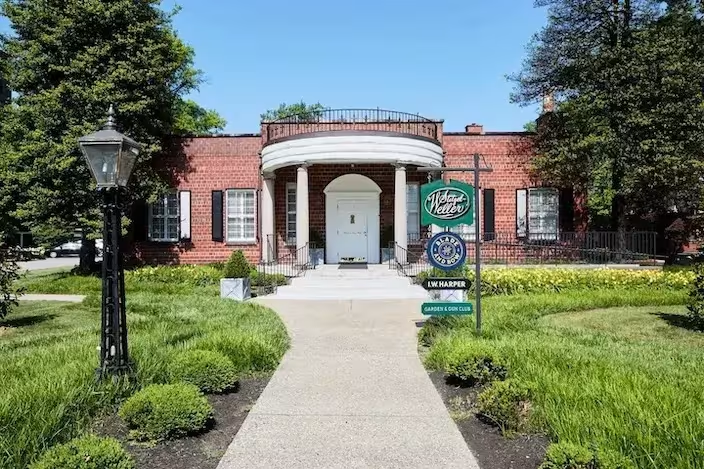
Q — What happened to the Stitzel-Weller distillery after the Van Winkles sold it?
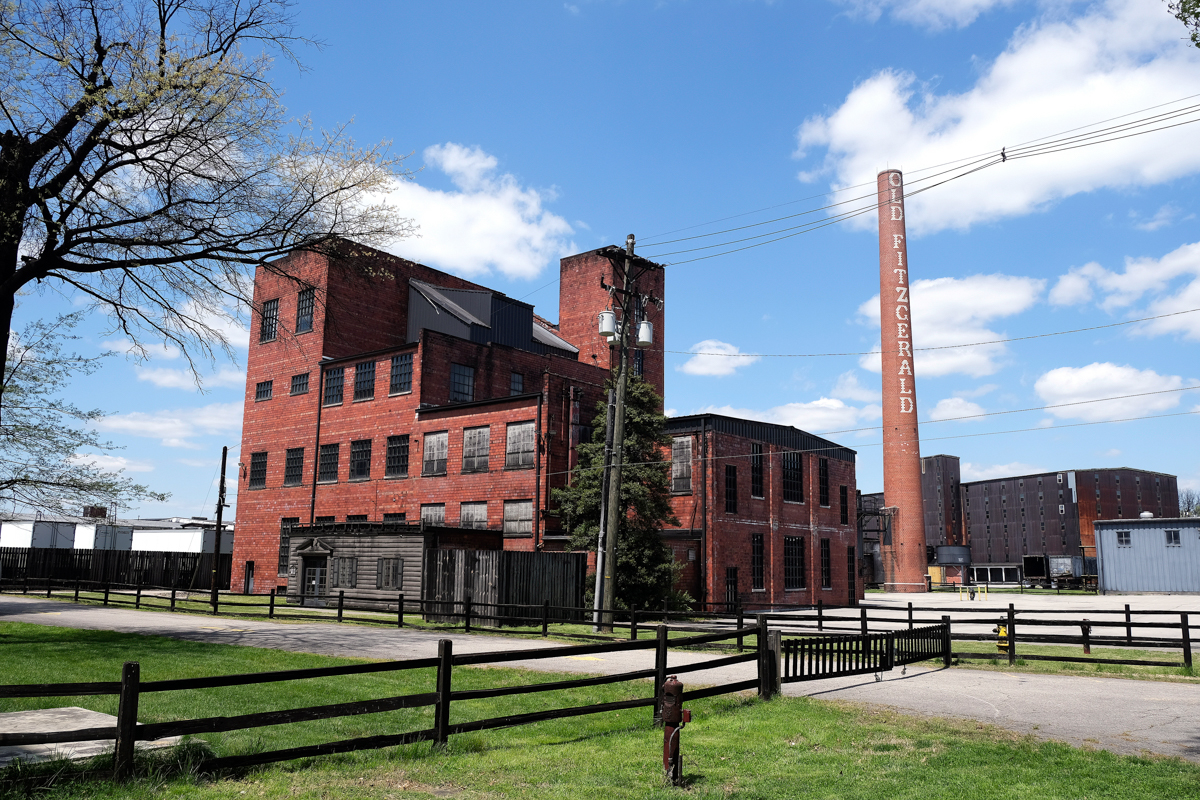
It kept distilling for another twenty years, which is the part most brand histories omit. Norton Simon renamed the plant the Old Fitzgerald Distillery; United Distillers acquired it in 1984; distillation ceased in 1992 as production moved to the new Bernheim facility. The site is now owned by Diageo. It reopened to the public in 2014 and today presents Blade and Bow, I.W. Harper and Orphan Barrel, with Bulleit having moved to its own Shelbyville visitor centre in 2019.
For collectors this matters more than the romance does: "Stitzel-Weller distillate" covers 1935 to 1992, but only the first thirty-seven years of it were made under a Van Winkle. Bottles predating the 1972 sale carry additional premium precisely because no Van Winkle was at the helm after it.
The distillery was sold. The recipe was not.
The Wheated Mash Bill — the Decision That Outlived the Distillery
Pappy chose wheat and never revisited the choice. Every brand Stitzel-Weller made ran on it, and when the company was broken up the recipe travelled with the stocks and the people rather than the real estate. Buffalo Trace runs the wheated recipe today across both the W.L. Weller range and the Van Winkle line — the two are siblings from the same mash bill, a point Buffalo Trace has never disguised and one that explains why Weller allocation tightened in lockstep with Pappy's.
The proportions are a different question. Buffalo Trace publishes the style, not the numbers, and the widely repeated claim that the recipe is unchanged since 1935 has no producer documentation behind it. What is documented is the intent: wheat as the softening grain, and long ageing that a rye-recipe bourbon of the same age would not survive as gracefully.
The annual release is "not just about whiskey, but about what it represents."
2025 COLLECTION ANNOUNCEMENT, SEPTEMBER 2025
Q — Why did Pappy Van Winkle become so difficult to buy?
Because supply was set two decades before demand arrived. Pappy Van Winkle reached shelves in 1994 as a single 20-year expression, in a much quieter bourbon market. Julian Van Winkle III spent the intervening decades selling remaining family stock under various labels while sourcing elsewhere to keep the business trading. When bourbon's cultural ascent arrived in the 2000s, the barrels that could have met it had been filled — or not filled — thirty years earlier.
Here the tidy version of the story breaks down, and the correction is worth making because almost nobody makes it. Not every early Pappy was Stitzel-Weller wheated bourbon. Sotheby's has documented that the first 23 Year Old, released in 1998 in the light green glass Van Winkle used until 1999, was sourced from Boone — and that the Boone whiskey is a high-rye bourbon rather than a wheated one. A collector paying a Stitzel-Weller premium on a green-glass bottle is, in at least some cases, buying something else entirely. Provenance research at this tier is bottling-by-bottling work, not era-by-era.
The 2002 Buffalo Trace Partnership
In 2002, with family stock running down, Julian Van Winkle III entered a production partnership with Buffalo Trace. Under it, Buffalo Trace distils, ages, and bottles to the family's specification; the family retains brand ownership, blending decisions, and final approval. Julian III has described the division plainly: he and his son Preston handle marketing and management of the brands, and leave the rest to the Buffalo Trace team.
The transition was gradual rather than clean, and it is still finishing. Trade coverage of the 2025 collection noted that the 23 Year Old may for the first time have been made entirely at Buffalo Trace — twenty-three years after the partnership began, which is exactly the arithmetic a 23-year age statement demands.
The Specifications
The table below lists the six expressions of the current Van Winkle Whiskey Collection, with suggested retail prices as announced for the 2025 release.
| EXPRESSION | AGE | PROOF / ABV | RECIPE | 2025 SRP |
|---|---|---|---|---|
| Old Rip Van Winkle Handmade Bourbon | 10 years | 107 / 53.5% | Wheated bourbon | $149.99 |
| Van Winkle Special Reserve ("Lot B") | 12 years | 90.4 / 45.2% | Wheated bourbon | $169.99 |
| Van Winkle Family Reserve Rye | 13 years | 95.6 / 47.8% | Rye | $229.99 |
| Pappy Van Winkle's Family Reserve | 15 years | 107 / 53.5% | Wheated bourbon | $239.99 |
| Pappy Van Winkle's Family Reserve | 20 years | 90.4 / 45.2% | Wheated bourbon | $359.99 |
| Pappy Van Winkle's Family Reserve | 23 years | 95.6 / 47.8% | Wheated bourbon | $499.99 |
Suggested retail prices as announced for the 2025 collection (September 2025). Retailers set their own prices; the family and Buffalo Trace have both stated publicly that they do not control them.
| BRAND OWNER | Old Rip Van Winkle Distillery (Van Winkle family) |
| PRODUCING DISTILLERY | Buffalo Trace Distillery, Frankfort, Kentucky |
| PARENT OF PRODUCER | Sazerac Company |
| CATEGORY / CLASS | Kentucky Straight Bourbon Whiskey (five expressions); Kentucky Straight Rye Whiskey (one expression) |
| RAW MATERIAL | Wheated mash bill — corn, wheat, malted barley; proportions unpublished by producer |
| HISTORIC DISTILLERY | Stitzel-Weller Distillery, Shively, Kentucky (1935–1992) |
| RELEASE CADENCE | One annual autumn release, six expressions |
| REGULATOR / IDENTIFIER | TTB; Kentucky straight bourbon and straight rye standards of identity |
Stitzel-Weller-Era Versus Buffalo Trace-Era Bottles
A Pappy Van Winkle 20 Year sold in 1996 holds whiskey distilled at Stitzel-Weller in 1976. A Pappy Van Winkle 20 Year sold in 2026 holds whiskey distilled at Buffalo Trace in 2006. Same label, same family, two different distilleries and two different rickhouse climates. Collectors treat them as separate objects because they are.
The premium attaching to the older bottlings is documented in the wider Stitzel-Weller market, where bottles from that era have traded upwards of $10,000 at auction and privately as of April 2026. The scarcest Van Winkle release, the Old Rip Van Winkle 25 Year, sits well above that: 710 bottles produced in total, with reported past sales above $30,000.
Two cautions belong here rather than in a footnote. First, those figures describe realised prices at specific moments, not a trend line anyone should extrapolate. Second, the counterfeit problem concentrates exactly where the premium does. Every Stitzel-Weller-era Van Winkle bottle is now more than a quarter-century old as bottled, and its glass, capsule, label stock, and tax strip all reflect production standards a forger has to reproduce rather than merely imitate.
Production standards a forger has to reproduce rather than merely imitate.
Where the Van Winkles Sit in a Collection
The lineup does three different jobs, and conflating them is how people overpay.
As drinking whiskey, the 15 Year is the expression most often named as the balance point of the range — high enough in proof to carry the wood, young enough that opening it does not feel like a financial decision. As a completion target, a full six-bottle vertical from a single release year is a recognised milestone in American whiskey collecting. As a store of value, the older Stitzel-Weller-era bottles have documented realised prices well into five figures.
Six expressions, one release year — a recognised milestone in American whiskey collecting.
Scored for Pappy Van Winkle's Family Reserve 23 Year Old, the range's apex expression.
The ASI grades scarcity and documented demand, not future value. See disclosure below.
- ◆Documented scarcity: a single annual release across six expressions, with most retailers distributing by lottery or loyalty allocation.
- ◆Sotheby's New York, December 10, 2022: a 2008-release 23 Year realised $52,500 against a $3,000–4,000 estimate.
- ◆The Old Rip Van Winkle 25 Year exists in 710 bottles, with reported past sales above $30,000.
- ◆Stitzel-Weller-era bottles have traded upwards of $10,000 as of April 2026.
- ◆The 2002 transition permanently caps the supply of Stitzel-Weller-distilled Van Winkle: no more will ever be made.
- ◆Auction demand is softening at the top: roughly 20% of nearly 130 Van Winkle bottles offered across two U.S. auctions in June 2025 went unsold.
- ◆Era labelling is not a reliable proxy for contents: Sotheby's documented that the 1998 green-glass 23 Year was sourced from Boone and is high-rye.
- ◆Counterfeiting concentrates at exactly this price point; value depends heavily on provenance.
- ◆Secondary sale is illegal or restricted in many jurisdictions, narrowing liquid exits.
MidnightWhiskey.com is an editorial publication. Nothing in this article is financial, investment, tax, or legal advice, and no content should be relied upon for investment decisions.