

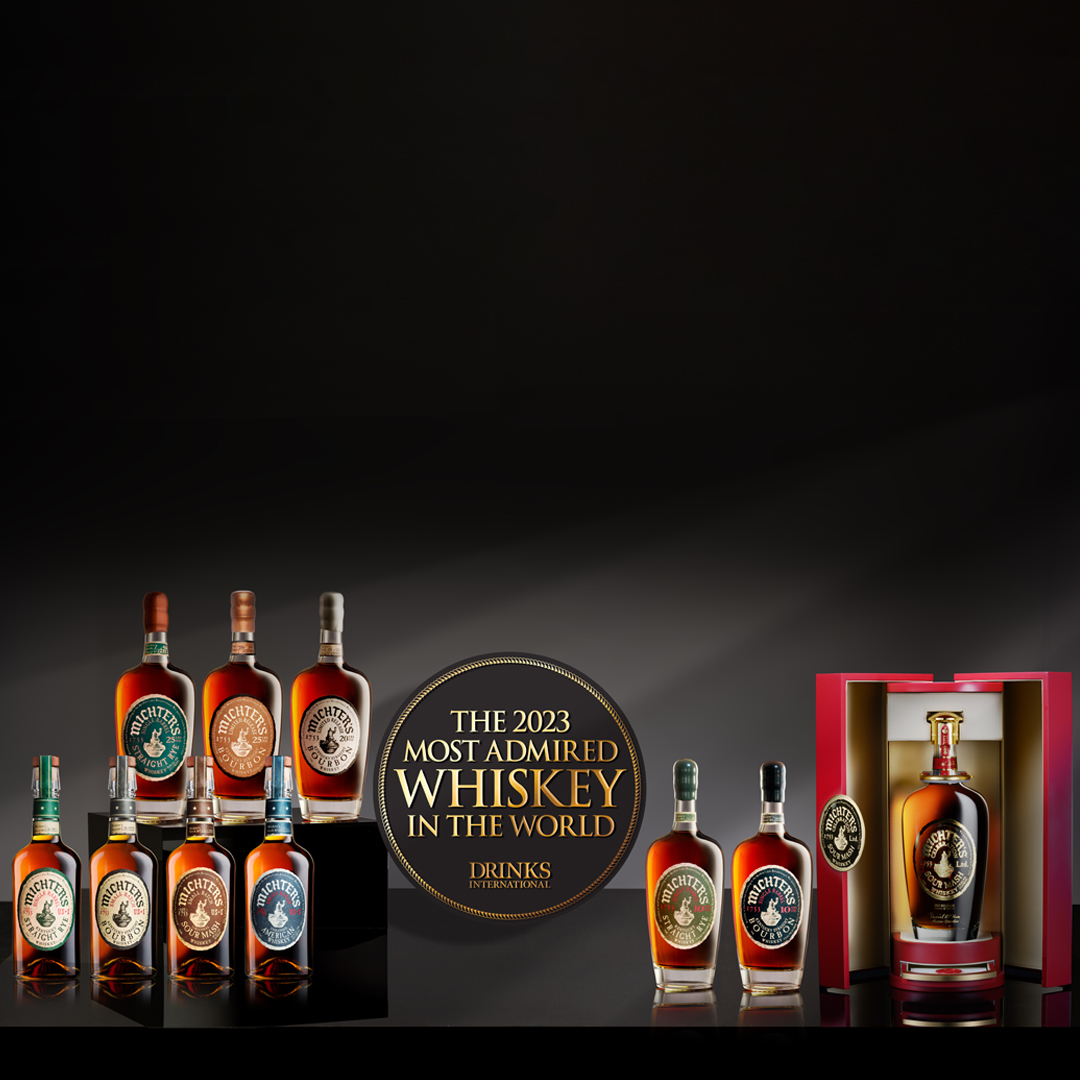
Michter's Whiskey Collection
Michter's is a Louisville, Kentucky whiskey house whose US★1 range is released only when Master Distiller Dan McKee and the Michter's tasting panel judge each whiskey ready — never on a schedule. Midnight Whiskey stocks three of its pillars: the small batch sour mash, its barrel-strength counterpart, and the single-barrel Kentucky straight rye.
The Michter's Collection
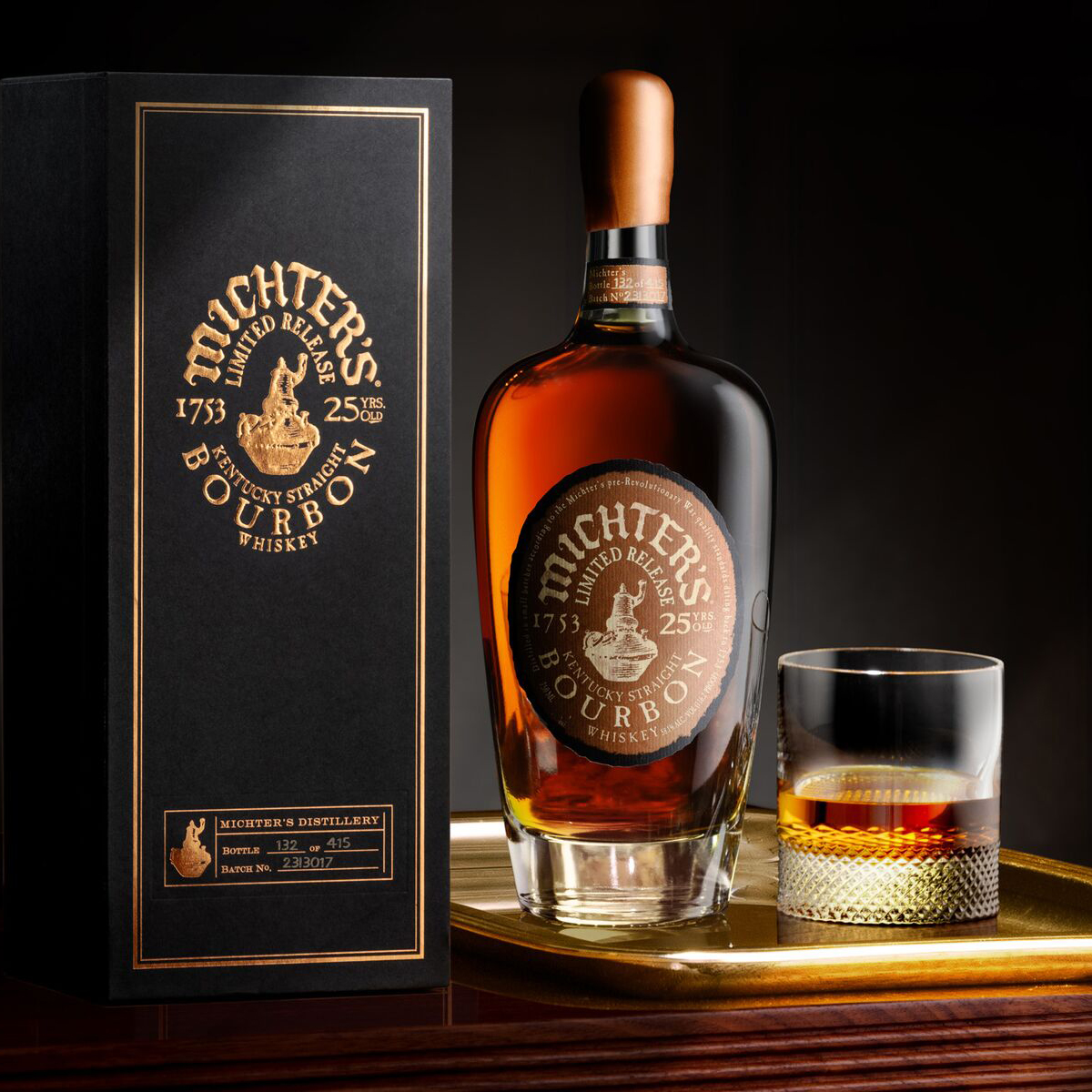
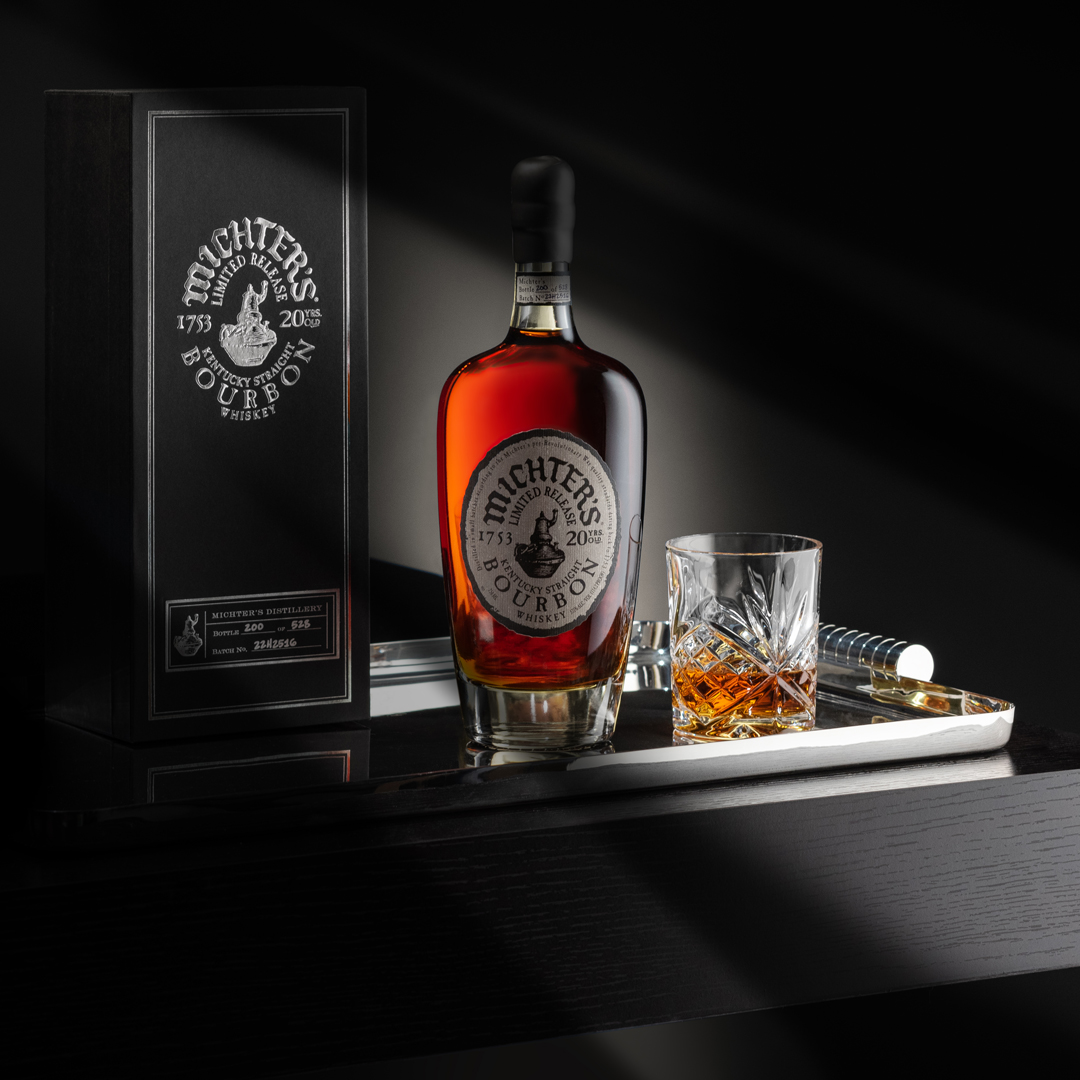
Michter's runs on an operating principle that sounds simple and is genuinely rare: nothing ships until it is ready. Master Distiller Dan McKee sets the specifications, Master of Maturation Andrea Wilson governs the barrels, and each US★1 whiskey is held until the tasting panel signs it off — an approach that has produced a range running from everyday bottlings to twenty-five-year age statements, under a name the producer traces to America's first whiskey company. Midnight Whiskey carries three of its pillars. The 86-proof small batch sour mash is the reference point — the house signature whose grain selection places it outside both the bourbon and rye categories, proofed to a fixed 86. The 2026 barrel-strength sour mash is that same whiskey with nothing taken out: a limited release bottled at whatever strength each barrel gives, the figure printed on every label. And the single-barrel Kentucky straight rye carries the grain the house's history begins with — one cask per bottle, its barrel number handwritten on the neck tag, at a deliberately approachable 84.8 proof. Together they put the house's full argument on one shelf: the everyday pour, the collector's strength, and the single cask.
- Louisville, Kentucky — production at Michter's Shively distillery, with the Fort Nelson Distillery on West Main Street as the brand's visitor home.
- No US★1 whiskey is released until Master Distiller Dan McKee and the Michter's tasting panel judge it ready — readiness, not the calendar, is the release gate.
- The range spans the US★1 core, barrel-strength and toasted-barrel releases, age statements at 10, 20 and 25 years, and the Legacy Series.
- Sour mash is the house signature: a whiskey deliberately outside both the bourbon and rye categories.
- Single-barrel bottlings carry their cask's number handwritten on the neck tag — each bottle names the barrel it came from.
From Shenk's To Bomberger's To Michter's
The company behind Michter's was founded in 1753 by John Shenk, a Swiss Mennonite farmer in Schaefferstown, Pennsylvania, and made its earliest whiskey from rye, the crop of the surrounding Blue Mountain Valley. Producer-commemorated lore holds that George Washington bought the distillery's whiskey to fortify his troops through the Valley Forge winter. Pennsylvania Dutchman Abraham Bomberger purchased the operation in the mid-1800s and gave it the name it carried for decades; Prohibition closed the doors in 1919, and a long string of owners followed. The Michter's name itself arrived in the 1950s, when then-owner Lou Forman combined the names of his sons, Michael and Peter. A 1989 bankruptcy left the Pennsylvania site abandoned — until Joseph J. Magliocco and industry veteran Richard "Dick" Newman filed for the unused trademark in the 1990s and rebuilt the brand in Kentucky, by design, at the center of modern American whiskey.
How The Whiskey Is Made
Michter's publishes six production techniques it credits for the house style — each, by the producer's own account, chosen for quality over yield and carried at real cost. They run from the cooperage to the filter:
- Air-dried oak — the cooperages open-air season the barrel wood for 18 to 60 months before coopering, a slower route than kiln-drying alone that softens the wood's harsher compounds.
- Toasting before charring — barrels are toasted first so the wood's sugars caramelize into a deeper red line beneath the mandatory char; the aging whiskey works through the char to reach it.
- A 103 barrel-entry proof — distillate goes into the barrel at 103 proof rather than the permitted 125, a historic Kentucky practice; less water is added at bottling, at the cost of fewer bottles per barrel.
- Heat cycling — warehouses are heated and then naturally cooled through the winter, pushing the whiskey into and out of the staves more often than the seasons alone would.
- Single barrel or small batch — every Michter's whiskey is either one barrel or batched in equipment custom-built to hold no more than twenty full barrels.
- Filtration chosen per whiskey — the medium and technique are selected for each expression individually instead of one house protocol.
Three Kentucky Sites, One Pennsylvania Inheritance
Production runs at the 88,674-square-foot Shively distillery, where distillate must pass two checks before it ever meets oak — a chemical analysis and a human sensory analysis. The Fort Nelson Distillery on Louisville's Museum Row is the visitor home, and it carries the line's most literal inheritance: the pot stills and cypress-wood fermenters from the original Michter's Pennsylvania operation, brought back online there. The third site is 205 acres of farmland in Springfield, where the company coordinates planting schedules with local Kentucky farmers for its grain.
The People Who Sign It Off
President Joseph J. Magliocco, who co-revived the brand in the 1990s, still runs it. Master Distiller Dan McKee — trained at the Booker Noe Distillery and brought to Michter's by Pam Heilmann — sets the specifications, helped build the Shively operation, and works the grain program on the Springfield land. Master of Maturation Andrea Wilson governs the barrel program and the warehouses. The release gate has not moved: nothing ships until the tasting panel agrees it is ready.


Michter's is a Louisville, Kentucky whiskey house whose US★1 range is released only when Master Distiller Dan McKee and the Michter's tasting panel judge each whiskey ready — never on a schedule. Midnight Whiskey stocks three of its pillars: the small batch sour mash, its barrel-strength counterpart, and the single-barrel Kentucky straight rye.
The Michter's Collection
Michter's runs on an operating principle that sounds simple and is genuinely rare: nothing ships until it is ready. Master Distiller Dan McKee sets the specifications, Master of Maturation Andrea Wilson governs the barrels, and each US★1 whiskey is held until the tasting panel signs it off — an approach that has produced a range running from everyday bottlings to twenty-five-year age statements, under a name the producer traces to America's first whiskey company. Midnight Whiskey carries three of its pillars. The 86-proof small batch sour mash is the reference point — the house signature whose grain selection places it outside both the bourbon and rye categories, proofed to a fixed 86. The 2026 barrel-strength sour mash is that same whiskey with nothing taken out: a limited release bottled at whatever strength each barrel gives, the figure printed on every label. And the single-barrel Kentucky straight rye carries the grain the house's history begins with — one cask per bottle, its barrel number handwritten on the neck tag, at a deliberately approachable 84.8 proof. Together they put the house's full argument on one shelf: the everyday pour, the collector's strength, and the single cask.
- Louisville, Kentucky — production at Michter's Shively distillery, with the Fort Nelson Distillery on West Main Street as the brand's visitor home.
- No US★1 whiskey is released until Master Distiller Dan McKee and the Michter's tasting panel judge it ready — readiness, not the calendar, is the release gate.
- The range spans the US★1 core, barrel-strength and toasted-barrel releases, age statements at 10, 20 and 25 years, and the Legacy Series.
- Sour mash is the house signature: a whiskey deliberately outside both the bourbon and rye categories.
- Single-barrel bottlings carry their cask's number handwritten on the neck tag — each bottle names the barrel it came from.
From Shenk's To Bomberger's To Michter's
The company behind Michter's was founded in 1753 by John Shenk, a Swiss Mennonite farmer in Schaefferstown, Pennsylvania, and made its earliest whiskey from rye, the crop of the surrounding Blue Mountain Valley. Producer-commemorated lore holds that George Washington bought the distillery's whiskey to fortify his troops through the Valley Forge winter. Pennsylvania Dutchman Abraham Bomberger purchased the operation in the mid-1800s and gave it the name it carried for decades; Prohibition closed the doors in 1919, and a long string of owners followed. The Michter's name itself arrived in the 1950s, when then-owner Lou Forman combined the names of his sons, Michael and Peter. A 1989 bankruptcy left the Pennsylvania site abandoned — until Joseph J. Magliocco and industry veteran Richard "Dick" Newman filed for the unused trademark in the 1990s and rebuilt the brand in Kentucky, by design, at the center of modern American whiskey.
How The Whiskey Is Made
Michter's publishes six production techniques it credits for the house style — each, by the producer's own account, chosen for quality over yield and carried at real cost. They run from the cooperage to the filter:
- Air-dried oak — the cooperages open-air season the barrel wood for 18 to 60 months before coopering, a slower route than kiln-drying alone that softens the wood's harsher compounds.
- Toasting before charring — barrels are toasted first so the wood's sugars caramelize into a deeper red line beneath the mandatory char; the aging whiskey works through the char to reach it.
- A 103 barrel-entry proof — distillate goes into the barrel at 103 proof rather than the permitted 125, a historic Kentucky practice; less water is added at bottling, at the cost of fewer bottles per barrel.
- Heat cycling — warehouses are heated and then naturally cooled through the winter, pushing the whiskey into and out of the staves more often than the seasons alone would.
- Single barrel or small batch — every Michter's whiskey is either one barrel or batched in equipment custom-built to hold no more than twenty full barrels.
- Filtration chosen per whiskey — the medium and technique are selected for each expression individually instead of one house protocol.
Three Kentucky Sites, One Pennsylvania Inheritance
Production runs at the 88,674-square-foot Shively distillery, where distillate must pass two checks before it ever meets oak — a chemical analysis and a human sensory analysis. The Fort Nelson Distillery on Louisville's Museum Row is the visitor home, and it carries the line's most literal inheritance: the pot stills and cypress-wood fermenters from the original Michter's Pennsylvania operation, brought back online there. The third site is 205 acres of farmland in Springfield, where the company coordinates planting schedules with local Kentucky farmers for its grain.
The People Who Sign It Off
President Joseph J. Magliocco, who co-revived the brand in the 1990s, still runs it. Master Distiller Dan McKee — trained at the Booker Noe Distillery and brought to Michter's by Pam Heilmann — sets the specifications, helped build the Shively operation, and works the grain program on the Springfield land. Master of Maturation Andrea Wilson governs the barrel program and the warehouses. The release gate has not moved: nothing ships until the tasting panel agrees it is ready.