


The Glenlivet
Speyside · Est. 1824
The Glenlivet: The Distillery That Defined Speyside
The Glenlivet is a single malt Scotch whisky distillery in Ballindalloch, Speyside, founded in 1824 by George Smith. It was the first distillery licensed in the parish of Glenlivet under the Excise Act of 1823, and it remains the only distillery entitled to carry the definite article in its name. Its unpeated, orchard-fruited house style — pineapple, pear, honey, and vanilla — became the template for what the world now calls Speyside whisky.
- Founded
- 1824, by George Smith
- Region
- Speyside — Ballindalloch, Banffshire, Scotland
- Current owner
- Chivas Brothers (Pernod Ricard)
- Water source
- Josie's Well
- Malt
- Unpeated
- Stills
- Tall, lantern-shaped copper pot stills
- Primary oak
- Ex-bourbon American oak, with sherry, French oak and Cognac cask finishes across the range
- House character
- Light, floral, orchard and tropical fruit; smooth and unsmoky
- Core range
- Founder's Reserve · 12 Year · 14 Year Cognac Cask · 15 Year French Oak Reserve · 18 Year · 21 Year Archive · 25 Year
- Prestige tiers
- Nàdurra (cask strength) · Winchester Collection (50 Year vintages)
From outlaw still to licensed distillery
George Smith distilled illegally in the Livet valley before he distilled legally. When the Excise Act of 1823 made licensing viable, Smith took the first licence in the glen — a decision his neighbours, still working illicit stills, regarded as a betrayal. He carried a pair of flintlock pistols for years afterward. They are on display at the distillery today.
Demand outgrew the original farm site. In 1858, Smith and his son John Gordon Smith built a larger distillery at Minmore, where The Glenlivet still stands. George died in 1871, by which point the name had become a liability as much as an asset: distilleries twenty miles from the glen were appending "Glenlivet" to their own names to signal the style, and wags called it the longest glen in Scotland.
John Gordon Smith went to law. The matter settled in 1884, and the outcome shaped Scotch labelling for a century: only Smith's distillery could call itself The Glenlivet, while others were permitted the hyphenated suffix. Macallan-Glenlivet and Cragganmore-Glenlivet appear on bottles into the 1970s and beyond. The Glenlivet merged with Glen Grant in 1953, was acquired by Seagram in 1977, and passed to Pernod Ricard in 2001. The distillery marked its bicentenary in 2024 with a 55 Year Old — its oldest official bottling to date.
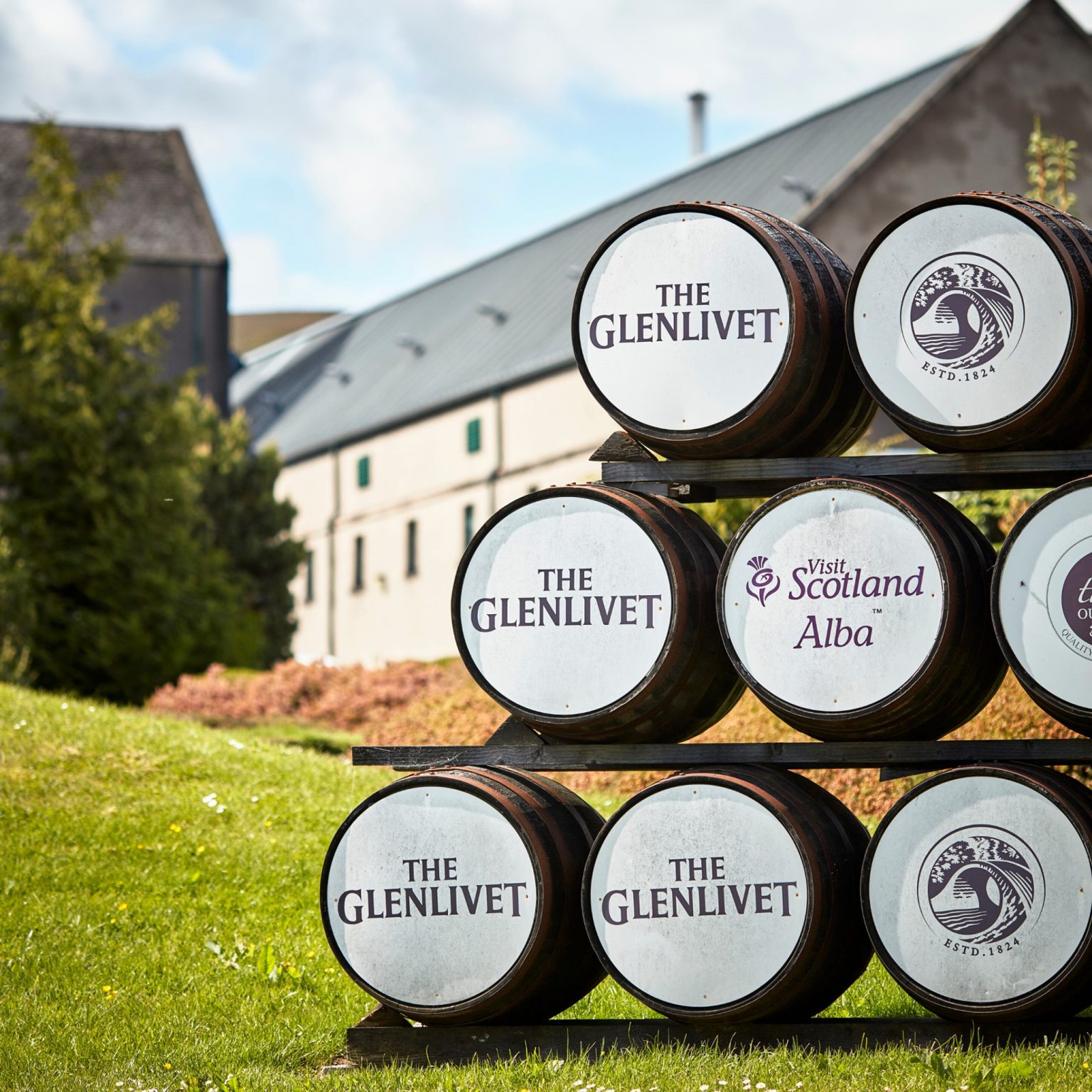

Why the whisky tastes the way it does
Three production decisions produce the Glenlivet signature. The malt is unpeated, so there is no smoke to mask the spirit. Fermentation runs long, generating fruity esters. And the stills are tall and lantern-shaped, forcing heavier compounds to fall back rather than carry over — the copper conversation that yields a light, clean, high-toned spirit. Predominantly ex-bourbon maturation then layers vanilla and coconut over the distillery's own pear and pineapple.
The core range
Founder's Reserve — No age statement, matured partly in first-fill American oak. Sweet orchard fruit, citrus, a soft creamy finish. The entry point.
12 Year Old — The reference bottling and, for many drinkers, the definition of Speyside: pineapple, green apple, honey and vanilla, medium-bodied and unhurried. Matured in a marriage of American and European oak.
14 Year Old Cognac Cask — Finished in French Cognac barrels. Adds candied orange and a rounder, sweeter body.
15 Year Old French Oak Reserve — Selective use of Limousin oak brings almond, spice and a fuller texture without burying the fruit.
18 Year Old — Where the range shifts from bright to layered. Toffee, dried fruit, marmalade, oak spice, a long finish. A perennial award winner.
21 Year Old Archive — Sherry-influenced, deeper and darker: figs, chocolate orange, tobacco leaf.
25 Year Old — Finished in first-fill Oloroso sherry butts. Rich, resinous, dense with dried fruit and old oak.
Nàdurra and the Winchester Collection
Nàdurra (Gaelic for "natural") is bottled at cask strength and non-chill-filtered, in batches — Oloroso, First Fill Selection, and Peated Cask editions among them. It is the closest the official range comes to a warehouse sample: undiluted, unfiltered, batch-variable.
The Winchester Collection sits at the summit — 50-year-old vintages released in tiny numbers, aimed squarely at the collector market. These are among the most sought-after official Glenlivet releases and appear at auction more often than on shelves.
Common questions
Why is it called "The" Glenlivet?
Because of an 1884 legal settlement. So many Speyside distilleries had attached "Glenlivet" to their own names that George Smith's son took the matter to law. The resolution gave Smith's distillery sole right to the definite article, while others could use the name only as a hyphenated suffix.
Is The Glenlivet peated?
No. The core range is made from unpeated malted barley and carries no smoke. The one exception is the Nàdurra Peated Cask edition, which is unpeated spirit finished in casks that previously held peated whisky — a light smoky influence, not a peated malt.
What does The Glenlivet taste like?
Pineapple, pear, green apple, honey and vanilla, with a smooth medium body and no smoke. Older expressions layer dried fruit, marmalade, chocolate and oak spice over that fruit-forward base.
Is The Glenlivet a good first single malt?
It is one of the most commonly recommended starting points in Scotch. The 12 Year Old is approachable, unpeated, and priced accessibly, and it teaches the Speyside profile that most other single malts are measured against.
What is the difference between Founder's Reserve and the 12 Year Old?
Founder's Reserve carries no age statement and leans on first-fill American oak for a softer, sweeter, more immediate profile. The 12 Year Old guarantees a minimum of twelve years in cask and combines American and European oak, giving more structure and a longer finish.
What is Nàdurra?
Nàdurra is The Glenlivet's cask-strength, non-chill-filtered series, released in batches. Bottling strength varies by batch, typically in the high 50s to low 60s ABV. Adding a few drops of water is standard practice.
How should I serve it?
Neat in a tulip-shaped glass, with water available. A small amount of water opens the fruit esters, particularly at cask strength. Ice mutes the aromatics on the older expressions.
Does an unopened bottle improve with age?
No. Whisky matures only in wood. Once bottled, an 18 Year Old stays an 18 Year Old regardless of how long the bottle sits. Bottles can gain market value, but the liquid does not develop. Store upright, out of sunlight, at stable room temperature.
Sourcing and authentication. Midnight Whiskey acquires Glenlivet through licensed distributors and verified private collections. Every bottle is inspected for fill level, capsule and label integrity, and lot coding before it ships. Older and discontinued expressions are photographed individually — ask the Private Client Concierge for condition reports on any vintage bottling.


Speyside · Est. 1824
The Glenlivet: The Distillery That Defined Speyside
The Glenlivet is a single malt Scotch whisky distillery in Ballindalloch, Speyside, founded in 1824 by George Smith. It was the first distillery licensed in the parish of Glenlivet under the Excise Act of 1823, and it remains the only distillery entitled to carry the definite article in its name. Its unpeated, orchard-fruited house style — pineapple, pear, honey, and vanilla — became the template for what the world now calls Speyside whisky.
- Founded
- 1824, by George Smith
- Region
- Speyside — Ballindalloch, Banffshire, Scotland
- Current owner
- Chivas Brothers (Pernod Ricard)
- Water source
- Josie's Well
- Malt
- Unpeated
- Stills
- Tall, lantern-shaped copper pot stills
- Primary oak
- Ex-bourbon American oak, with sherry, French oak and Cognac cask finishes across the range
- House character
- Light, floral, orchard and tropical fruit; smooth and unsmoky
- Core range
- Founder's Reserve · 12 Year · 14 Year Cognac Cask · 15 Year French Oak Reserve · 18 Year · 21 Year Archive · 25 Year
- Prestige tiers
- Nàdurra (cask strength) · Winchester Collection (50 Year vintages)
From outlaw still to licensed distillery
George Smith distilled illegally in the Livet valley before he distilled legally. When the Excise Act of 1823 made licensing viable, Smith took the first licence in the glen — a decision his neighbours, still working illicit stills, regarded as a betrayal. He carried a pair of flintlock pistols for years afterward. They are on display at the distillery today.
Demand outgrew the original farm site. In 1858, Smith and his son John Gordon Smith built a larger distillery at Minmore, where The Glenlivet still stands. George died in 1871, by which point the name had become a liability as much as an asset: distilleries twenty miles from the glen were appending "Glenlivet" to their own names to signal the style, and wags called it the longest glen in Scotland.
John Gordon Smith went to law. The matter settled in 1884, and the outcome shaped Scotch labelling for a century: only Smith's distillery could call itself The Glenlivet, while others were permitted the hyphenated suffix. Macallan-Glenlivet and Cragganmore-Glenlivet appear on bottles into the 1970s and beyond. The Glenlivet merged with Glen Grant in 1953, was acquired by Seagram in 1977, and passed to Pernod Ricard in 2001. The distillery marked its bicentenary in 2024 with a 55 Year Old — its oldest official bottling to date.
Why the whisky tastes the way it does
Three production decisions produce the Glenlivet signature. The malt is unpeated, so there is no smoke to mask the spirit. Fermentation runs long, generating fruity esters. And the stills are tall and lantern-shaped, forcing heavier compounds to fall back rather than carry over — the copper conversation that yields a light, clean, high-toned spirit. Predominantly ex-bourbon maturation then layers vanilla and coconut over the distillery's own pear and pineapple.
The core range
Founder's Reserve — No age statement, matured partly in first-fill American oak. Sweet orchard fruit, citrus, a soft creamy finish. The entry point.
12 Year Old — The reference bottling and, for many drinkers, the definition of Speyside: pineapple, green apple, honey and vanilla, medium-bodied and unhurried. Matured in a marriage of American and European oak.
14 Year Old Cognac Cask — Finished in French Cognac barrels. Adds candied orange and a rounder, sweeter body.
15 Year Old French Oak Reserve — Selective use of Limousin oak brings almond, spice and a fuller texture without burying the fruit.
18 Year Old — Where the range shifts from bright to layered. Toffee, dried fruit, marmalade, oak spice, a long finish. A perennial award winner.
21 Year Old Archive — Sherry-influenced, deeper and darker: figs, chocolate orange, tobacco leaf.
25 Year Old — Finished in first-fill Oloroso sherry butts. Rich, resinous, dense with dried fruit and old oak.
Nàdurra and the Winchester Collection
Nàdurra (Gaelic for "natural") is bottled at cask strength and non-chill-filtered, in batches — Oloroso, First Fill Selection, and Peated Cask editions among them. It is the closest the official range comes to a warehouse sample: undiluted, unfiltered, batch-variable.
The Winchester Collection sits at the summit — 50-year-old vintages released in tiny numbers, aimed squarely at the collector market. These are among the most sought-after official Glenlivet releases and appear at auction more often than on shelves.
Common questions
Why is it called "The" Glenlivet?
Because of an 1884 legal settlement. So many Speyside distilleries had attached "Glenlivet" to their own names that George Smith's son took the matter to law. The resolution gave Smith's distillery sole right to the definite article, while others could use the name only as a hyphenated suffix.
Is The Glenlivet peated?
No. The core range is made from unpeated malted barley and carries no smoke. The one exception is the Nàdurra Peated Cask edition, which is unpeated spirit finished in casks that previously held peated whisky — a light smoky influence, not a peated malt.
What does The Glenlivet taste like?
Pineapple, pear, green apple, honey and vanilla, with a smooth medium body and no smoke. Older expressions layer dried fruit, marmalade, chocolate and oak spice over that fruit-forward base.
Is The Glenlivet a good first single malt?
It is one of the most commonly recommended starting points in Scotch. The 12 Year Old is approachable, unpeated, and priced accessibly, and it teaches the Speyside profile that most other single malts are measured against.
What is the difference between Founder's Reserve and the 12 Year Old?
Founder's Reserve carries no age statement and leans on first-fill American oak for a softer, sweeter, more immediate profile. The 12 Year Old guarantees a minimum of twelve years in cask and combines American and European oak, giving more structure and a longer finish.
What is Nàdurra?
Nàdurra is The Glenlivet's cask-strength, non-chill-filtered series, released in batches. Bottling strength varies by batch, typically in the high 50s to low 60s ABV. Adding a few drops of water is standard practice.
How should I serve it?
Neat in a tulip-shaped glass, with water available. A small amount of water opens the fruit esters, particularly at cask strength. Ice mutes the aromatics on the older expressions.
Does an unopened bottle improve with age?
No. Whisky matures only in wood. Once bottled, an 18 Year Old stays an 18 Year Old regardless of how long the bottle sits. Bottles can gain market value, but the liquid does not develop. Store upright, out of sunlight, at stable room temperature.
Sourcing and authentication. Midnight Whiskey acquires Glenlivet through licensed distributors and verified private collections. Every bottle is inspected for fill level, capsule and label integrity, and lot coding before it ships. Older and discontinued expressions are photographed individually — ask the Private Client Concierge for condition reports on any vintage bottling.